
triple pass rotary dryer
The Best Choices for Your Project
- Customization Service:The maximum customizable diameter is 3.5 meters
- Solution:Provide solutions for your problems
- Dryer length: 8 meters to 50 meters.
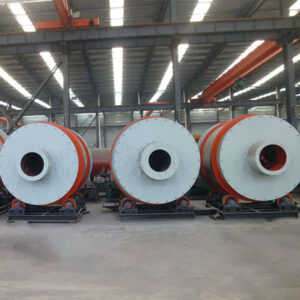
triple pass rotary dryer
In the world of industrial drying, efficiency and consistency are paramount. If you’re looking for a drying solution that maximizes heat utilization and delivers uniform results, the Triple Pass Rotary Dryer might be the perfect fit for your operation.
This comprehensive guide will explain what a triple pass rotary dryer is, how it works, its key benefits, and how it compares to traditional dryers.
The working principle is ingeniously simple yet highly effective:
First Pass (Inner Cylinder): The wet material is fed into the innermost cylinder. Hot air from the furnace is introduced in the same direction (co-current flow). This initial contact rapidly evaporates surface moisture.
Second Pass (Middle Cylinder): The material is then conveyed into the middle cylinder. Here, it moves in the opposite direction to the hot air (counter-current flow). This stage removes most of the inherent moisture within the particles.
Third Pass (Outer Cylinder): Finally, the material enters the outermost cylinder, resuming co-current flow with the drying air. This last stage ensures final drying and cools the material down to a safe, manageable temperature for storage and handling.
This triple-pass journey ensures that the heat energy is used to its maximum potential, resulting in exceptionally low fuel consumption.
This document provides a comprehensive overview of the various models and technical parameters of our Triple Pass Rotary Dryers. These dryers are engineered for maximum thermal efficiency, uniform drying, and low operating costs across a wide range of industries.
Standard Model Series: TPRD Series
The TPRD series is our flagship range, designed for robustness and high-performance drying of various materials.
| Model | Drum Diameter (m) | Drum Length (m) | Evaporation Capacity (kg H₂O/h) | Initial Moisture (%) | Final Moisture (%) | Main Motor Power (kW) | Total Installed Power (kW) | Coal Consumption (kg coal/kg H₂O) | Production Capacity (TPH) * | Weight (approx. tons) |
|---|---|---|---|---|---|---|---|---|---|---|
| TPRD-1.2×10 | 1.2 | 10 | 800 – 1,200 | 25-40 | <13 | 11 | 18 | ~0.03 | 2.5 – 4.0 | 18 |
| TPRD-1.5×12 | 1.5 | 12 | 1,500 – 2,200 | 25-45 | <13 | 15 | 25 | ~0.028 | 4.5 – 7.0 | 26 |
| TPRD-2.0×14 | 2.0 | 14 | 3,000 – 4,500 | 30-50 | <13 | 22 | 37 | ~0.026 | 8 – 12 | 38 |
| TPRD-2.4×16 | 2.4 | 16 | 5,000 – 7,000 | 30-50 | <13 | 30 | 55 | ~0.025 | 14 – 20 | 52 |
| TPRD-2.8×18 | 2.8 | 18 | 8,000 – 10,000 | 35-55 | <13 | 45 | 90 | ~0.024 | 22 – 28 | 75 |
| TPRD-3.2×20 | 3.2 | 20 | 12,000 – 15,000 | 35-55 | <13 | 55 | 132 | ~0.023 | 30 – 40 | 110 |
Note: Production Capacity (TPH) is highly dependent on material type and initial moisture content. The values given are for common materials like sand or DDGS.
Biomass-Specific Series: TPRD-B Series
This series is optimized for high-fiber, low-bulk-density biomass materials with specialized flight designs to prevent clogging.
| Model | Drum Diameter (m) | Evaporation Capacity (kg H₂O/h) | Suitable Materials | Special Feature | Main Motor Power (kW) |
|---|---|---|---|---|---|
| TPRD-B-1.8×15 | 1.8 | 3,500 – 5,000 | Sawdust, Wood Chips | Anti-clogging flights | 30 |
| TPRD-B-2.2×16 | 2.2 | 6,000 – 8,000 | Straw, Bagasse | High-volume inlet | 37 |
| TPRD-B-2.6×18 | 2.6 | 9,000 – 12,000 | Bark, MSW | Abrasion-resistant lining | 45 |
High-Moisture Sludge Series: TPRD-S Series
Engineered for sticky, high-moisture materials like municipal or industrial sludge, featuring a “beater” mechanism at the inlet.
| Model | Drum Diameter (m) | Evaporation Capacity (kg H₂O/h) | Initial Moisture (Max %) | Final Moisture (%) | Special Feature | Main Motor Power (kW) |
|---|---|---|---|---|---|---|
| TPRD-S-2.0×14 | 2.0 | 2,500 – 3,500 | 85% | <30 | Integrated Beater | 30 |
| TPRD-S-2.4×16 | 2.4 | 4,500 – 6,000 | 85% | <30 | Anti-adhesion system | 45 |
| TPRD-S-2.8×18 | 2.8 | 7,000 – 9,000 | 85% | <30 | Heavy-duty flights | 55 |
Detailed Breakdown of Key Parameters
1. Thermal System Parameters:
Heat Source: Diesel, Natural Gas, Coal, Biomass, Propane, Waste Heat.
Inlet Air Temperature: Adjustable, typically 500°C – 750°C.
Outlet Air Temperature: 90°C – 120°C (demonstrating high thermal efficiency).
Thermal Efficiency: Typically 75% – 85%.
Fuel Consumption: 0.022 – 0.035 kg of standard coal per kg of water evaporated.
2. Mechanical & Structural Parameters:
Drum Rotation Speed: 3 – 8 rpm (adjustable via variable frequency drive).
Drum Inclination Angle: 3° – 5° (fixed, but material flow is controlled by speed and air flow).
Drum Material: Q235B Carbon Steel, with options for SS304/316 Stainless Steel for corrosive environments or food-grade applications.
Thickness: Shell thickness ranges from 12mm to 25mm depending on model size.
Lifting Flights: Specially designed L-shaped and copy-and-fall flights inside each pass to maximize heat exchange.
3. Auxiliary Equipment Specifications:
Feeder: Screw feeder (sealed type for powders), belt feeder, or vibratory feeder.
Discharge System: Rotary air lock valve to prevent air leakage.
Dust Collector: Cyclone separator (standard) with optional baghouse filter or wet scrubber for ultra-fine particles.
Induced Draft (ID) Fan: Centrifugal fan, power matched to the system’s pressure drop.
Control System: PLC-based automatic control for temperature, feed rate, and speed monitoring.
4. General Performance Parameters:
Drying Airflow: Ranges from 15,000 m³/h to 150,000 m³/h depending on model.
Noise Level: < 85 dB at 1 meter distance.
Installation: Pre-fabricated modules for easier and faster on-site assembly.
Disclaimer: The specifications listed above are for reference and marketing purposes. Actual performance and dimensions may vary based on specific material characteristics (e.g., particle size, density, viscosity) and customer requirements. All our dryers are custom-engineered to ensure optimal performance for your project.
Contact us today for a detailed quotation and a custom-designed solution for your specific material!
Key Features and Advantages of Triple Pass Rotary Dryers
Why choose a triple pass dryer? The advantages are significant:
High Thermal Efficiency: The triple-pass design traps heat within the system, drastically reducing heat loss. This can lead to fuel savings of up to 30-40% compared to single-pass dryers.
Uniform Drying: The extended residence time and multiple direction changes ensure every particle is dried evenly and consistently.
Compact Footprint: Despite its complex internal structure, the triple-pass design is more space-efficient than multiple single-pass dryers achieving the same output.
Low Exhaust Gas Temperature: The efficient heat transfer means the exhaust gases exit at a much lower temperature, reducing energy waste and making dust collection easier.
Gentle on Material: The tumbling action is controlled, making it suitable for both fragile and abrasive materials without excessive degradation.
Automated Operation: These dryers are designed for continuous, stable operation with minimal manual intervention.
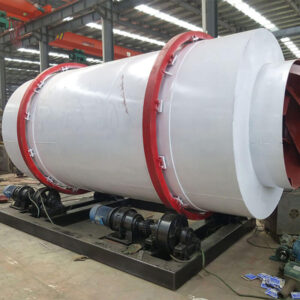
Triple Pass vs. Single Pass Rotary Dryer: A Clear Comparison
| Feature | Triple Pass Rotary Dryer | Single Pass Rotary Dryer |
|---|---|---|
| Efficiency | Very High. Multiple passes maximize heat transfer. | Lower. Significant heat is lost with the exhaust. |
| Fuel Consumption | Low. Saves 30-40% on energy costs. | High. Less efficient heat use. |
| Footprint | Compact. Three stages in one unit. | Larger. Requires more space for the same capacity. |
| Drying Uniformity | Excellent. Consistent moisture content. | Variable. Can lead to over-drying or under-drying. |
| Initial Investment | Higher | Lower |
| Operational Cost | Lower over the long term. | Higher due to fuel consumption. |
Industries Served by Triple Pass Rotary Dryers
The versatility of the triple pass rotary dryer makes it ideal for numerous industries, including:
Agriculture: Drying animal feed, DDGS (Distillers’ Dried Grains with Solubles), corn germ, and forage.
Mineral Processing: Drying sand, silica, clay, limestone, ore concentrate, and gypsum.
Biomass & Biofuel: Drying wood chips, sawdust, bark, and other biomass for pellet production.
Chemical Industry: Drying various chemical powders and compounds.
Superior Heat Source Utilization
The triple pass rotary dryer is renowned for its exceptional ability to utilize various heat sources efficiently. It can be effectively fired by:
Natural Gas / Propane
Diesel / Heavy Oil
Biomass / Wood Chips
Coal
Waste Heat from other processes
Its design ensures that regardless of the heat source, the energy is extracted and used to its fullest potential, making it an economically and environmentally sound choice.
What Materials Can a Triple Pass Rotary Dryer Process?
This dryer handles a vast array of materials, particularly those with high initial moisture content. Common examples include:
Agricultural Products: DDGS, corn germ, wheat bran, distillery sludge.
Minerals: Sand, silica, clay, bentonite, ores.
Biomass: Sawdust, wood shavings, bark, straw.
Industrial By-products: Metal chips, filter cake, sludge.
We Provide High-Quality Triple Pass Rotary Dryers
Are you looking to enhance your drying process, reduce operational costs, and improve product quality? We are a leading supplier of robust and efficient industrial drying solutions.
We provide custom-engineered Triple Pass Rotary Dryers tailored to your specific material, capacity, and production goals. Our experts will work with you from design to installation to ensure you get the most out of your investment.
Contact us today for a free consultation! Let us show you how our triple pass rotary dryer can revolutionize your drying operation.