We provide fly ash drying equipment for you
Fly Ash Dryer
The Best Choices for Your Project
- Customization Service:Tailor-made fly ash dryers for you
- Solution:Provide solutions for your problems
- Dryer length: 8 meters to 36 meters.
Fly Ash Dryer
A rotary kiln for building materials is a large-scale, continuous thermal processing industrial equipment specially designed for calcining, sintering, drying and activating various building raw materials. It is regarded as the core equipment in the building material production industry, widely applied in cement clinker production, active lime processing, dolomite calcination, clay sintering, fly ash activation and other construction material production scenarios.
Different from industrial rotary kilns for chemical and metallurgical industries, the building material rotary kiln adopts targeted structural optimization and temperature control system according to the physical and chemical characteristics of construction raw materials. It mainly processes bulk, granular and powdery building materials, realizing continuous high-temperature thermal treatment to convert raw materials into qualified finished building materials. Equipped with refractory lining, variable speed drive system and scientific air supply and combustion system, this type of rotary kiln can stably operate in long-term high-temperature environments, meeting the large-scale and continuous production demands of the building material industry.
The production capacity of rotary kilns for building materials is graded by equipment specifications, covering small, medium and large models, which can fully adapt to the production demands of small processing plants and large modern building material production lines. Its output is mainly affected by kiln cylinder diameter, length, rotation speed, inclination angle, material characteristics and calcination temperature.
For small-sized building material rotary kilns, the daily output ranges from 100 tons to 500 tons, which is suitable for small lime processing plants and small cement auxiliary material production lines. Medium-sized rotary kilns have a daily production capacity of 500 tons to 2000 tons, being the mainstream model for medium-sized building material factories, widely used in conventional lime and cement clinker production. Large-scale industrial rotary kilns for building materials can achieve a daily output of 2000 tons to 10000 tons, matching the production scale of large modern cement plants and high-purity lime production bases.
In terms of operational efficiency, the optimized building material rotary kiln has a high material utilization rate. The continuous feeding and discharging mode avoids production interruption, and the effective calcination rate of materials is over 98%. Meanwhile, the supporting preheating and cooling system further improves production efficiency, reduces material waste, and ensures stable and sustainable output in long-term operation.
| Model | Φ2.0×6m | Φ2.5×6.5m | Φ3.0×7m | Φ3.2×7m |
|---|---|---|---|---|
| Outer Drum Inner Diameter (m) | 2.0 | 2.5 | 3.0 | 3.2 |
| Outer Drum Length (m) | 6 | 6.5 | 7 | 7 |
| Drum Volume (m³) | 18.84 | 31.89 | 50.26 | 56.30 |
| Drum Rotation Speed (rpm) | 4-6.5 | 4-6.5 | 4-6.5 | 4-6.5 |
| Initial Slag Moisture (%) | 20 | |||
| Final Slag Moisture (%) | 1-3 | |||
| Initial Fly Ash Moisture (%) | 20 | |||
| Final Fly Ash Moisture (%) | 1-3 | |||
| High Inlet Temperature (°C) | 700-750 | 700-750 | 700-750 | 700-750 |
| Production Capacity (t/h) | Fly Ash 10-15 | Fly Ash 15-20 | Fly Ash 25-35 | Fly Ash 35-45 |
| Slag 22-25 | Slag 30-35 | Slag 40-50 | Slag 55-65 | |
| Coal Consumption (KG/H) | 17-24 | 17-20 | 17-20 | 17-20 |
| Motor Model | Y2-160m-4E | Y2-132m-4E | Y2-132m-4E | Y2-160m-4 |
| Motor Power (KW) | 5.5×2 | 7.5×2 | 7.5×4 | 11×4 |
| Gearbox Model | XWD-5.5KW-8 | XWD-5.5KW-5 | XWD-7.5KW-8 | XWD-7.5KW-8 |
| Gearbox Ratio | 29 | 29 | 29 | 29 |
Fly Ash Dryer
Features of the Fly Ash Dryer
Independent Lifting Plate Design: Our fly ash dryer uses an independent lifting plate design, which accelerates the drying process and saves up to 30% more heat energy compared to conventional dryers.
Large Capacity: The dryer is capable of continuous operation, with each machine able to dry from dozens to hundreds of tons of fly ash per day, enabling large-scale drying operations.
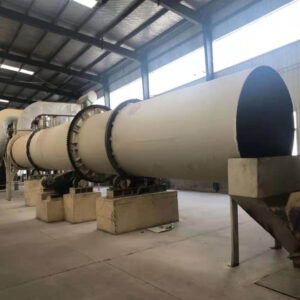
High Automation: The dryer is controlled by a PLC (Programmable Logic Controller) system, which allows real-time monitoring of temperature, moisture, and other parameters. The system also supports one-touch start and stop functions and automatic adjustments, making the operation simple and improving production efficiency.
High-Quality Dried Product: The automated system reduces errors, ensuring accurate temperature and moisture control. As a result, the dried fly ash has uniform moisture content, with levels below 1%, and does not form lumps.
Stable Operation: The dryer uses a rotary drum design, supported by rollers. The structure is robust and can withstand overloads, ensuring stable and reliable operation.
Why Dry Fly Ash?
High Transportation Costs: Wet fly ash tends to clump together, increasing both its weight and volume, making transportation more difficult.
Affects Performance: High moisture content significantly affects the reactivity of fly ash in cement and concrete, leading to reduced strength and unstable quality. This makes it unsuitable for high-standard construction materials.
Environmental Pollution: Wet fly ash is prone to dust generation and leachate during storage and transportation, leading to secondary pollution.
Drying fly ash helps to utilize waste materials, turning them into a resource. The drying process reduces the moisture content of fly ash to below 1%, improving its flowability and reactivity.
Considerations for Drying Fly Ash
When using a fly ash dryer, several key factors must be considered:
Fly Ash is Fine and Easily Clumps: Due to its fine texture and high moisture, fly ash can easily form lumps during the drying process. Pre-grinding or adding a dispersing device inside the dryer can help break up clumps.
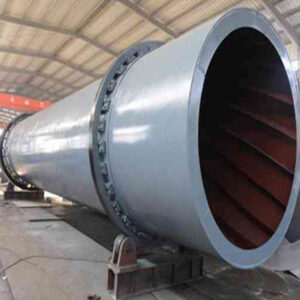
Temperature Control: Temperature is crucial during the drying process. Both excessively high and low temperatures can affect drying efficiency. We use a PLC control system to maintain the drying temperature between 400°C and 600°C. This range can be adjusted based on the fly ash’s moisture content and drying requirements.
Airflow and Wind Speed Control: Airflow and wind speed should be matched to the heat input. If the airflow is too low, water vapor will not be removed quickly enough, reducing efficiency. If the airflow is too high, the residence time of the material inside the drum is shortened, leading to incomplete drying and increased dust and energy consumption.
Stable Feeding Process: The feeding process should be stable to prevent fluctuations in the feed rate. Our fly ash dryer is equipped with a sensing design that ensures a consistent feed rate, preventing blockages and ensuring smooth flow of material through the dryer.
Drying Time: The drying time should be adjusted according to the fly ash’s moisture content. Over-drying or under-drying should be avoided.
Environmental Dust Control: Fly ash is fine and generates a lot of dust during the drying process. Efficient dust collection systems (such as bag filters or electrostatic precipitators) are essential to prevent environmental pollution and maintain air quality.
How to Correctly Choose a Fly Ash Dryer
We are a globally experienced manufacturer of fly ash dryers with cutting-edge design and production capabilities. We can provide customers with personalized solutions. For instance, based on factors like the fly ash’s moisture content, processing capacity, and operating environment, we can tailor the equipment configuration to best suit the customer’s needs.
Our fly ash dryer products are highly efficient and energy-saving under full automation. They feature large-scale processing capabilities and include overload protection, temperature control systems, and fire and explosion prevention systems, ensuring production safety for customers. With a wealth of fly ash dryer cases worldwide, we also offer comprehensive after-sales services, such as equipment installation and debugging, operator training, regular maintenance, and remote technical support.
Auxiliary Equipment for Fly Ash Dryer
Dust collector for coal ash powder dryer
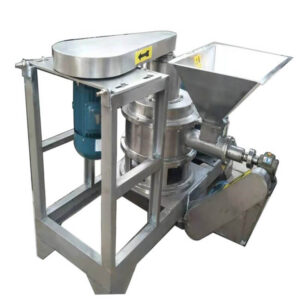
Coal ash powder fine crusher
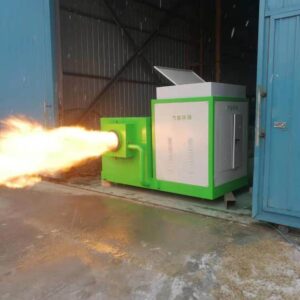
Hot Air Furnace
Get the best solution now!
WRITE TO US
Request A Free Quote
Send us a message if you have any questions or request a quote. Our experts will give you a reply within 24 hours and help you select the right activated carbon you want.
- [email protected]
- (86) 15036188923