
feed ingredient dryer
The Best Choices for Your Project
- Customization Service:The maximum customizable diameter is 3.5 meters
- Solution:Provide solutions for your problems
- Dryer length: 8 meters to 50 meters.
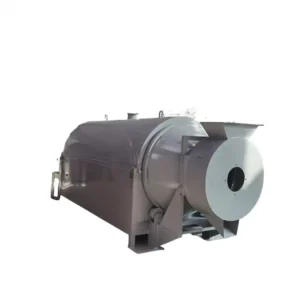
feed ingredient dryer
What is a Feed Ingredient Dryer?
A feed ingredient dryer is an industrial machine designed to reduce moisture content in raw feed materials such as grains, soybean meal, fishmeal, and other agricultural byproducts. It ensures safe storage, extended shelf life, and improved nutritional quality by removing excess water through controlled heating and airflow.
How Does a Feed Ingredient Dryer Work?
The dryer operates by passing heated air through wet feed ingredients in a rotating drum or static bed. Moisture evaporates as the materials are evenly exposed to high temperatures. The evaporated moisture is then expelled via an exhaust system, leaving behind uniformly dried products. Advanced models utilize indirect heat exchange or vacuum drying to preserve heat-sensitive nutrients.
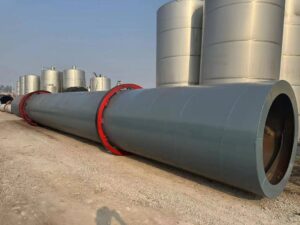
Detailed Parameters and Models of Feed Ingredient Dryers
he following table provides specifications for two common types of industrial dryers used in the feed industry: the Single Pass Rotary Drum Dryer (a workhorse for high-volume ingredients) and the Vertical Desiccant Dryer (used for sensitive materials or where floor space is limited).
| Parameter / Category | Specification | Model Example 1: Single Pass Rotary Drum Dryer | Model Example 2: Vertical Tray (Desiccant) Dryer |
|---|---|---|---|
| General Information | Dryer Type | Direct Heat, Convective Dryer | Indirect Heat, Conductive/Convective Dryer |
| Typical Application | High-volume drying of DDGS, corn germ, wheat middlings, meat & bone meal, poultry by-product meal. | Gentle drying of heat-sensitive ingredients like yeast, whey, vitamin premixes, enzyme-treated grains. | |
| Model Name/Series | BUHLER ASD Series or ANDRIZT SP Series | Wyssmont TURBO-Dryer or GEA ConsiGma® Dryer | |
| Capacity & Performance | Feedstock Moisture (Input) | 25% – 70% (wet basis) | 15% – 40% (wet basis) |
| Product Moisture (Output) | 10% – 12% (adjustable) | 8% – 12% (adjustable) | |
| Evaporation Capacity | 1,000 kg/h to 15,000 kg/h of water | 100 kg/h to 5,000 kg/h of water | |
| Throughput (Solid Material) | 5 TPH to 50 TPH (varies with ingredient) | 0.5 TPH to 10 TPH (varies with ingredient) | |
| Physical Dimensions | Dryer Length | 10 m to 30 m | N/A (Vertical Design) |
| Dryer Diameter | 1.5 m to 3.5 m | N/A | |
| Footprint (L x W) | e.g., 20m x 5m | e.g., 4m x 4m | |
| Height | ~4 m (excluding supports) | 8 m to 20 m | |
| Weight (Empty) | 10,000 kg to 80,000 kg | 5,000 kg to 30,000 kg | |
| Construction & Design | Shell Material | Carbon Steel (CS) with internal lifters | Stainless Steel (304 or 316L) for food contact |
| Inner Lining | Abrasion-resistant steel plates | N/A – Polished trays | |
| Heat Source | Natural gas, diesel, steam heater, thermal oil | Low-pressure steam, hot water, thermal oil | |
| Air Flow | Co-current or Counter-current | Forced convection with fans | |
| Rotation Speed | 3 to 8 RPM (variable frequency drive) | N/A (stationary shell, rotating arms) | |
| Drive & Power System | Main Drive Motor | 15 kW to 150 kW | 5 kW to 50 kW |
| Fan Motor Power | 30 kW to 250 kW | 10 kW to 75 kW | |
| Voltage | 400V / 480V, 3 Phase, 50/60 Hz | 400V / 480V, 3 Phase, 50/60 Hz | |
| Control & Automation | Control System | PLC with HMI (Human-Machine Interface) | PLC with HMI, recipe management |
| Key Monitoring Parameters | Inlet/Outlet air temperature, drum speed, burner temperature, exhaust gas O₂. | Product temperature on each tray, air dew point, heating medium temperature/pressure. | |
| Automation Features | Fully automatic start/stop, moisture control loop, safety interlocks, data logging. | Fully automatic batch cycles, CIP (Clean-in-Place) systems, full data traceability. | |
| Auxiliary Systems | Dust Collection | Cyclone + Baghouse Filter or Wet Scrubber | Integrated internal filtration |
| Feeding System | Screw conveyor, rotary valve | Screw feeder, pneumatic conveyor | |
| Discharge System | Screw conveyor, rotary cooler |
Which Feed Ingredients Can Be Dried?
This equipment can process a wide range of materials, including:
Grains: corn, wheat, barley
Protein-rich meals: soybean meal, rapeseed meal, fishmeal
Agricultural byproducts: bran, distillers’ grains
Additives: vitamins, mineral premixes
Benefits of Dried Feed Ingredients
Prevents Mold & Spoilage: Low moisture inhibits microbial growth.
Enhances Nutritional Efficiency: Improved digestibility and nutrient retention.
Reduces Transportation Costs: Lighter weight lowers logistics expenses.
Extends Shelf Life: Enables long-term storage without degradation.
Moisture Requirements: From Raw to <1%
The dryer accepts raw materials with initial moisture levels up to 30-75% and reduces them to below 1% if required. Precise temperature and airflow control ensure optimal drying without damaging nutrients.
Automation Level
Modern dryers feature full automation with PLC systems, sensors, and touchscreen interfaces. Functions like temperature regulation, moisture monitoring, and shutdown are automated, ensuring consistency and minimal human intervention.
Customized Solutions Available
We offer tailor-made dryers based on specific requirements, including capacity, energy source (gas, steam, electricity), and spatial constraints. Customization ensures seamless integration into existing production lines.