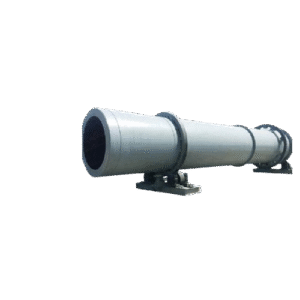
gas fired drum dryer

The Best Choices for Your Project

gas fired drum dryer

A gas fired drum dryer is an industrial drying system that utilizes the combustion of gas to generate heat for removing moisture from various materials. It primarily consists of one or more rotating drums. The drum’s outer or inner surface is heated, and the wet material is applied to this hot surface. As the drum rotates, the material is evenly heated and dried, and is then scraped off once the desired moisture content is achieved. This dryer is known for its high thermal efficiency and uniform drying performance.

Gas fired drum dryers are highly versatile in their fuel sources. They can efficiently operate on a variety of combustible gases, including natural gas, propane (LPG), butane, and even biogas or landfill gas in specific configurations. The choice of gas often depends on local availability, cost, and environmental considerations. The key advantage of using gas as a fuel is its high combustion efficiency. Modern gas burners can achieve efficiency rates exceeding 90%, meaning most of the energy from the gas is converted directly into usable heat. This direct heating method minimizes heat loss, making it significantly more energy-efficient and cost-effective compared to indirect heating methods like steam. Furthermore, advanced control systems allow for precise temperature regulation, optimizing fuel consumption for different materials and moisture levels.

Feature / ParameterModel GFD-1210 (Standard Single Drum)Model GFD-1820 (High-Capacity Single Drum)Model GFD-1520D (Twin Drum for Flakes/Powder)
Drum Size (Diameter x Length)1200 mm x 1000 mm1800 mm x 2000 mm1500 mm x 2000 mm (per drum)
Heating Surface Area~3.8 m²~11.3 m²~18.8 m² (total)
Suitable Material FormSlurries, PastesSolutions, Slurries, SludgesSlurries, High-viscosity pastes
Typical Evaporation Capacity (kg H₂O/h)80 – 120300 – 450500 – 750
Final Moisture Content0.5% – 5% (material dependent)0.5% – 5% (material dependent)1% – 8% (material dependent)
Drum Rotation Speed2 – 10 rpm (adjustable)2 – 8 rpm (adjustable)3 – 12 rpm (adjustable)
Heat Source / FuelNatural Gas / PropaneNatural Gas / PropaneNatural Gas / Propane
Max. Steam Pressure (alternative)0.8 MPa (if steam-heated)0.8 MPa (if steam-heated)N/A (Direct-fired only)
Drum Surface Temperature120°C – 200°C120°C – 200°C130°C – 220°C
Main Motor Power4 kW7.5 kW11 kW x 2
Overall Dimensions (LxWxH)4.2 x 1.8 x 2.5 m6.5 x 2.5 x 3.2 m7.0 x 3.0 x 3.5 m
Key Application ExamplePigments, Starch, YeastSewage Sludge, Mineral SlurriesPotato Flakes, Animal Feed, Chemicals

Working Principle of a Gas Fired Drum Dryer

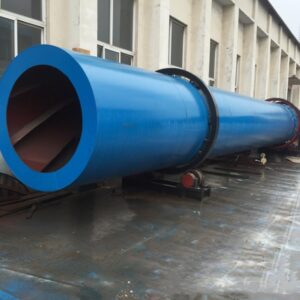
The operation of a gas fired drum dryer is straightforward yet effective. The process begins with the ignition of the gas burner, which directs hot combustion gases through the interior of the rotating drum (or around an outer shell, depending on the design). This heats the drum’s metal surface to a high temperature. Simultaneously, a thin, uniform layer of the wet feedstock—which can be a solution, slurry, or paste—is applied to the exterior surface of the drum. This is often done using a feed tank and an application system like a splash feeder or dip feed. As the drum rotates, the material adhered to the hot surface undergoes rapid heat transfer. Moisture evaporates quickly from the material film. After the drum completes a full or partial rotation, a closely positioned knife (or scraper) peels off the now-dried sheet or flake of material from the drum surface. The dried product is then conveyed to a collection bin for packaging or further processing.
Applicable Industries and Materials

The versatility of the gas fired drum dryer makes it suitable for a wide range of industries. Key sectors include:

  • Chemical Industry: For drying pigments, dyes, salts, organic acids, and various chemical intermediates.

  • Food and Beverage Industry: For producing potato flakes, yeast, starches (corn, potato, tapioca), fruit pulps, and milk powder.

  • Pharmaceutical Industry: For drying botanical extracts, excipients, and other heat-sensitive materials under controlled conditions.

  • Environmental and Waste Management: For drying sewage sludge, converting it into a stable, sanitized powder suitable for disposal or use as a fertilizer.

  • Mineral Processing: For drying clay, limestone, gypsum, and other ores.

  • Feed and Fertilizer Industry: For drying animal feed additives and producing powdered fertilizers.

Final Moisture Content and Drying Characteristics

A significant advantage of the gas fired drum dryer is its ability to achieve a very low final moisture content, often down to 0.5% to 5%, depending on the material properties and operational parameters. The drying process is extremely rapid due to the direct contact with the high-temperature drum surface, typically taking only a few seconds to a few minutes per revolution. This short residence time is particularly beneficial for heat-sensitive materials, as it minimizes thermal degradation. The final moisture level can be precisely controlled by adjusting the drum speed, heating temperature, and the thickness of the applied feed layer.

Key Features and Advantages

Gas fired drum dryers offer several compelling benefits:

  • High Thermal Efficiency: Direct heating leads to minimal energy waste.

  • Compact Design: Offers a large drying surface area within a relatively small footprint.

  • Uniform Drying: The rotating drum ensures consistent heat application and product quality.

  • Rapid Drying: Short processing time protects product quality and increases throughput.

  • Versatility: Capable of handling a diverse range of materials and achieving various moisture levels.

  • Continuous Operation: Designed for 24/7 industrial production, ensuring high output.

  • Relatively Low Operating Costs: High efficiency and the use of often cost-effective natural gas contribute to lower operational expenses.

Customization to Meet Client Requirements

We understand that every industrial application has unique needs. Therefore, we offer fully customizable gas fired drum dryers. Customization options can include the drum’s size, surface finish, and number (single or double drum), the type of feeding and scraping mechanisms, the specific burner and heat source configuration, the material of construction (e.g., stainless steel for corrosive or food-grade applications), and the integration of advanced control systems and safety features. Our engineering team works closely with clients to design a dryer that perfectly fits their material characteristics, desired capacity, final product specifications, and plant layout.

滚动至顶部

Get A Free Consultation And Quote