
Rotary Dryer for Drying Chicken Manure
The Best Choices for Your Project
- Customization Service:The maximum customizable diameter is 3.5 meters
- Solution:Provide solutions for your problems
- Dryer length: 8 meters to 50 meters.
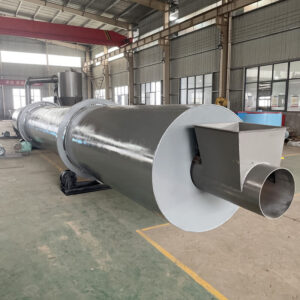
Rotary Dryer for Drying Chicken Manure
Simply put, it’s an industrial drying system designed to rapidly reduce the moisture content in fresh chicken manure. Unlike simple sun-drying, a dedicated dryer, especially a rotary drum dryer, offers a controlled, efficient, and continuous process. It handles the high-moisture, sticky nature of raw manure, turning it into a stable, dry, granular product that is easy to store, transport, and use.
The magic happens inside a slowly rotating, large inclined drum. Here’s the step-by-step:
Feeding: Wet chicken manure is consistently fed into the elevated end of the rotary drum.
Tumbling & Flight Action: As the drum rotates, internal lifting flights pick up the manure and shower it down as a “curtain” inside the drum. This dramatically increases its surface area.
Heat Contact: A hot air furnace (burning biomass, natural gas, or even dried manure itself) generates a stream of hot gases. These gases flow through the drum, directly contacting the tumbling manure particles, causing instantaneous moisture evaporation.
Progressive Drying: The combination of the drum’s incline and rotation gently moves the manure from the feed end to the discharge end. During this journey, it becomes progressively drier.
Discharge: The now dry, powdered, or granular manure exits the lower end of the drum, ready for cooling and packaging.
This model is engineered for efficiency, durability, and is part of a complete drying system solution we provide.
| Parameter Category | Specification |
|---|---|
| Model | RDM-2010 |
| Drum Dimensions (Diameter x Length) | 2.0 m x 10 m |
| Capacity (Evaporation) | 1,000 – 1,200 kg H₂O/hour |
| Initial Moisture Content | Up to 75% (wet basis) |
| Final Moisture Content | Adjustable, typically ≤ 13% |
| Heat Source Options | Biomass (Wood Chips, Manure Pellets), Natural Gas, Diesel, Coal |
| Fuel Consumption (Biomass) | ~150 kg/hour (Varies with moisture) |
| Power Consumption | ~25 kW (Total for drum motor, fan, etc.) |
| Rotation Speed | 3-8 rpm (Adjustable) |
| Inclination Angle | 3-5° (Adjustable) |
| Drying Temperature | 500°C – 700°C (Inlet); 70°C – 90°C (Outlet) |
| Required Auxiliary Equipment | Belt Conveyor, Hot Air Furnace, Cyclone Dust Collector, Wet Scrubber, Cooling Screw Conveyor |
Key Explanations for the Parameters:
Capacity (Evaporation): This is the most critical metric. It means this dryer can remove 1 to 1.2 tons of water per hour. The actual throughput of wet manure depends on your starting moisture. For example, reducing 4 tons of manure from 75% to 13% moisture involves removing about 1.1 tons of water.
Moisture Content: We specify “wet basis,” which is standard in this industry. “Up to 75%” means it can handle the wettest, freshest manure, though a solid-liquid separator is recommended beforehand to boost capacity and save fuel.
Heat Source Flexibility: We don’t lock you into one fuel type. A biomass burner is the most cost-effective, often using waste wood or the finished dried manure pellets as fuel, creating a closed-loop system.
Adjustable Rotation & Inclination: These controls allow the operator to fine-tune the drying process. A slower speed and steeper angle mean a longer residence time inside the drum for very wet feedstock.
Auxiliary Equipment: This is not an optional extra; it’s essential for a functional and environmentally compliant plant. The Wet Scrubber is crucial for solving the odor problem by neutralizing the exhaust gases.
Let’s Find the Perfect Fit for Your Operation.
The RDM-2010 is just one example. We specialize in custom-engineered solutions. To recommend the ideal model, we need to understand your specific situation:
Daily volume of fresh manure?
Current moisture content?
Your local available fuel type?
Your target for the final product (e.g., fertilizer pellets)?
We provide the complete turnkey project, from design and manufacturing to installation and training, ensuring you get a system that delivers maximum return on investment.
Can It Dry Other Materials Besides Chicken Manure?
Absolutely. This versatility is a key advantage. A well-designed rotary dryer is a multi-purpose workhorse. It can effectively dry a wide range of organic and inorganic materials, including:
Other Manures: Duck manure, cow dung, pig slurry.
Agricultural Waste: Sawdust, straw, distillers’ grains.
Industrial Sludge: Municipal and industrial sludge.
Other: Beet pulp, brewery spent grain, etc.
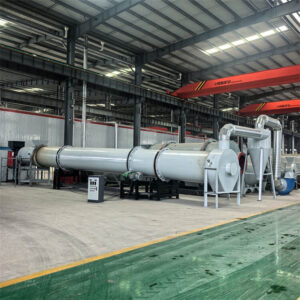
Why Does Chicken Manure Need to Be Dried? The Critical Reasons.
Drying isn’t just optional; it’s essential for modern farming.
Weight & Volume Reduction: Removes up to 50% of the weight, drastically cutting storage and transportation costs.
Pathogen & Odor Elimination: The high-temperature process kills harmful pathogens like E. coli and Salmonella and neutralizes weed seeds, creating a safer product.
Prevents Nutrient Loss: Lock in valuable Nitrogen. Wet manure easily loses nitrogen through ammonia volatilization. Drying preserves it.
Stops Environmental Pollution: Dry manure doesn’t leach harmful nutrients and pathogens into groundwater or produce significant runoff.
What Can Dried Chicken Manure Be Used For? From Waste to Wealth.
Dried chicken manure is no longer waste; it’s a commodity.
High-Quality Organic Fertilizer: It’s rich in N-P-K (Nitrogen, Phosphorus, Potassium) and organic matter, improving soil structure and fertility.
Animal Feed Additive (Processed): After proper fermentation and sterilization, it can be used as a protein-rich component in livestock and fish feed.
Biofuel/Energy Source: The dried manure can be pelletized and used as a clean-burning biomass fuel for boilers.
How is the Terrible Smell Handled? Our Odor Control Solutions.
We tackle the odor issue head-on. The secret is that the primary drying process itself contains the smell within the hot air stream. This smelly, moisture-laden air is then directed to a Dedicated Deodorizing System, such as a Cyclone Dust Collector followed by a Wet Scrubber or Biofilter. The scrubber uses a chemical spray to neutralize odor compounds, while a biofilter uses microorganisms to consume them, ensuring the exhaust is clean and compliant with environmental regulations.
Key Considerations for Drying Chicken Manure.
Initial Moisture Content: It can be very high (70-80%), requiring a dryer with sufficient heat capacity.
Stickiness: The right internal flight design is crucial to prevent material from sticking to the drum walls.
Fuel Source: Choosing an efficient and cost-effective heat source (e.g., biomass, gas) is key to operational economics.
Environmental Compliance: Ensure your system includes proper dust and odor control equipment.
Key Advantages of Our Rotary Chicken Manure Dryer.
High Efficiency & Large Capacity: Continuous operation handles bulk volumes.
Superior Drying Uniformity: The tumbling action ensures every particle is evenly dried.
Robust & Durable Construction: Built for the harsh, abrasive, and corrosive environment of manure drying.
Energy Efficient: Designs maximize heat transfer, saving you money on fuel.
Low Maintenance: Simple, robust mechanics mean less downtime.
How to Choose the Right Chicken Manure Dryer: A Buyer's Checklist.
Don’t just buy a machine; invest in a solution. Ask these questions:
What is my daily/weekly processing volume? (This determines the size.)
What is the initial and desired final moisture content?
What fuel is most available and cost-effective for my operation?
What are my local emission and odor control regulations?
Does the supplier offer customizations and a proven track record?
We Provide the Complete Drying Solution for You.
We are not just equipment sellers. We are your partners in waste-to-value solutions. We provide:
Custom-Engineered Dryers: Tailored to your specific manure type, moisture, and capacity needs.
Turnkey Projects: We handle everything from design and manufacturing to installation and commissioning.
Auxiliary Equipment: We supply the complete line, including conveyors, hot air furnaces, deodorizers, and cooling systems.
Expert Support & Training: Ensuring you can operate and maintain your system effectively for years to come.
Beyond the Basics: Other Key Aspects of Chicken Manure Drying.
For optimal results, consider the entire process. Pre-dewatering with a solid-liquid separator can significantly reduce the dryer’s energy load. The choice of heat source is critical; while diesel is easy, biomass burners using wood chips or even the dried manure itself offer massive operational savings. Furthermore, modern dryers can be integrated with pelletizing lines to transform the dried powder into even more valuable and marketable fertilizer or fuel pellets, maximizing your return on investment.