
Silica Sand Dryer
The Best Choices for Your Project
We are a Silica Sand Dryer manufacturer, specializing in providing you with rice husk drying solutions
- Production capacity: 1-20T/H.
- Customizable diameter from 80cm to 3600cm.
- Dryer length: 8 meters to 36 meters.
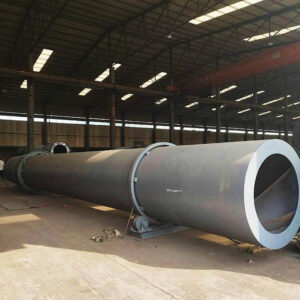
Silica Sand Dryer
What is a Silica Sand Dryer?
A silica sand dryer is an industrial drying system specifically designed to reduce the moisture content of silica sand (quartz sand). It is a robust, rotating drum dryer that applies controlled heat to efficiently and uniformly remove water from wet silica sand, transforming it into a dry, free-flowing material suitable for various industrial applications.
How Does a Silica Sand Dryer Work?
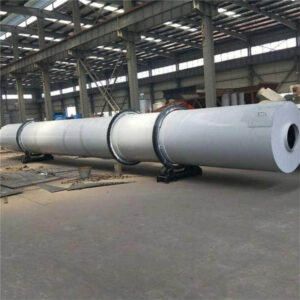
The working principle typically involves a rotating drum inclined slightly from the horizontal. Wet silica sand is fed into the upper end of the drum. As the drum rotates, internal lifting flights cascade the sand through a stream of hot air or gases generated by a burner (using natural gas, oil, or biomass). The sand moves counter-currently or co-currently to the hot air, ensuring maximum heat transfer and evaporation. The dried sand is discharged at the lower end, while moist exhaust gases are treated and released through a dust collection system.
Benefits of Drying Silica Sand with a Dryer
Drying silica sand is crucial because moisture can negatively impact its performance in downstream processes. Key benefits include:
Improved Quality & Consistency: Ensures uniform grain size and properties.
Prevents Clumping: Eliminates moisture-induced agglomeration for easy handling and transportation.
Enhances Processing Efficiency: Essential for precise mixing, coating, or melting in subsequent stages.
Reduces Transportation Costs: Lower moisture means less weight and lower shipping fees.
Applications of Dried Silica Sand
Dried silica sand is a vital raw material in numerous industries:
Glass Manufacturing: For producing flat glass, container glass, fiberglass, and specialty glass.
Foundry & Casting: As molding sand for metal casting.
Construction: In cement, mortars, and specialty concretes.
Oil & Gas Industry: As frac sand in hydraulic fracturing.
Water Filtration: As a filtration medium.
Chemicals & Ceramics: As a base material or filler.
Advantages and Features of a Silica Sand Dryer
Modern silica sand dryers offer several key advantages:
High Thermal Efficiency: Advanced heat exchange designs minimize fuel consumption.
Robust Construction: Built with wear-resistant materials to handle abrasive sand.
Uniform Drying: Even heat distribution prevents over-drying or under-drying.
Intelligent Control: Automated PLC systems for precise temperature and moisture control.
Environmental Compliance: Equipped with bag filters or scrubbers to control dust and emissions.
Low Maintenance: Simple design with easy access for service.
Customer Perspective: Benefits for Clients
From a client’s viewpoint, investing in a silica sand dryer delivers tangible value:
Increased Profitability: Through higher product quality, reduced waste, and lower logistics costs.
Production Reliability: Ensures a consistent, year-round supply of dry sand, independent of weather.
Operational Flexibility: Ability to process sand with varying initial moisture levels.
Quick ROI: Energy-efficient designs and low operational costs lead to a fast return on investment.
Market Advantage: Enables entry into higher-value markets that require strictly controlled low-moisture sand.
Moisture Handling Capacity
A well-designed silica sand dryer is highly versatile and can efficiently handle a wide range of initial moisture contents. Typically, it can process sand with moisture levels from as high as 15-25% down to a precise final moisture content as low as 0.5-1%, depending on the specific process requirements.
Additional Benefits of Using a Silica Sand Dryer
Beyond the core advantages, these dryers also contribute to:
Space Optimization: Compact designs for limited industrial footprints.
Enhanced Safety: Reduced risk of material freezing during cold weather transport and minimized microbial growth in stored sand.
Product Value Addition: Enables further processing like precise sizing and coating, which are impossible with damp sand.
Request for Quotation (RFQ) Considerations for a Silica Sand Drye
When preparing an RFQ for a silica sand dryer, provide the following details to ensure an accurate proposal:
Capacity Requirements: Desired hourly output (e.g., tons per hour).
Moisture Parameters: Initial moisture content and target final moisture.
Fuel Preference: Type of fuel available (natural gas, diesel, coal, etc.).
Space & Power Constraints: Available installation space and power supply.
Automation Level: Desired degree of automation (manual vs. fully automatic control).
Environmental Standards: Local emission and noise regulations to comply with.
After-Sales Service: Requirements for installation supervision, training, and spare parts.