
We provide Dryer equipment for you
fruit pulp dryer
The Best Choices for Your Project
- Customization Service: Dryer for you
- Solution:Provide solutions for your problems
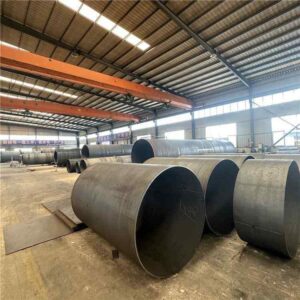
- Dryer length: 8 meters to 36 meters.
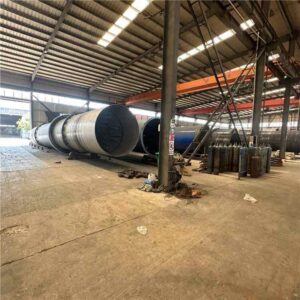
Table of Contents
The Ultimate Guide to Rotary Drum Fruit Pulp Dryers: Turn Waste into Value
Tired of seeing valuable fruit pulp go to waste? Are you grappling with spoilage, storage challenges, and lost profits in your juice, cider, or puree production processes? The industrial-grade solution, a Rotary Drum Fruit Pulp Dryer, serves as a transformative technology that converts wet and perishable fruit by-products into stable and economically advantageous resources. Let’s break down exactly how this powerful machine can revolutionize your business.
What constitutes a Rotary Drum Fruit Pulp Dryer?
Designed to efficiently remove moisture from wet fruit pulp and pomace, a Rotary Drum Fruit Pulp Dryer serves as a continuous processing workhorse in various industrial applications. Central to its design is a sizable rotating cylinder, known as the drum, which facilitates the gentle tumbling of materials while enabling the passage of hot air through its interior. The integration of motion and heat guarantees a uniform and rapid drying process while preventing any risk of burning. Designed for high-capacity and consistent output in demanding commercial and industrial environments, it emphasizes durability and practical results rather than lab-scale experimental setups.
What Fruit Waste Can You Dry with It?
Handling a wide range of pulpy by-products, this machine demonstrates an exceptionally versatile performance:
Citrus Pulp: After juicing, the pulp of orange, lemon, grapefruit, and lime remains.
Apple Pomace: The classic by-product from cider and juice production.
Berry Mash: From strawberries, blueberries, raspberries, and cranberries.
Tropical Fruit Pulp: Mango, pineapple, banana, papaya, and guava waste materials.
Stone Fruit Pomace: The selection ranges from peaches, apricots, plums, to cherries.
Tomato Pomace & Skins: A substantial by-product generated from the ketchup and sauce manufacturing industries.
Other: Carrot pulp, beet pulp, and other analogous vegetable residues.
In What Applications Can the Dried Fruit Pulp Be Utilized?
Once dried, this material is no longer considered “waste” but rather transforms into a valuable commodity:
Animal Feed: A highly nutritious component incorporated into feed formulations for cattle, sheep, goats, and poultry.
Organic Fertilizer & Soil Amendment: Direct utilization or composting can be employed to enrich the soil.
Functional Food Ingredients: Ground into powders for use as fiber supplements, bakery mixes, or natural flavorings.
Biofuel Production: Utilized as a biomass feedstock for the production of pellet fuel or biogas generation.
Convenient Storage & Transport: Drying drastically reduces volume and weight, slashing storage and shipping costs.
What Is the Mechanism of Pulp Processing in the Rotary Drum Dryer?
The procedure is uncomplicated yet demonstrates significant efficacy:
Feeding: The slightly inclined rotating drum receives wet pulp evenly fed into its elevated end.
Tumbling & Flight Action: Within the drum, as it rotates, a series of internal “flights” elevate the pulp and cause it to cascade downward, thereby forming a curtain of material.
Heat Application: Hot air flows through the drum, directly contacting the showering pulp particles. Moisture evaporates instantly.
Progression & Discharge: Gently inclining and rotating, the drying pulp is gradually moved toward the lower end. By the time it exits, it has achieved a uniformly dry and crisp texture.
Cyclone Separation: Fine particle-laden exhaust air is directed through a cyclone to effectively recover valuable product dust.
What Types of Heat Sources Are Applicable?
One key advantage is fuel flexibility. Selection can be made considering local availability and cost:
Natural Gas or Propane: Clean, efficient, and easy to control.
Diesel/Oil: Suitable for areas without gas lines, this option offers high energy density.
Biomass/Biogas: Utilizing wood chips, sawdust, or self-dehydrated pomace as fuel sources can achieve remarkable energy circularity while maintaining minimal operational expenses.
Steam: It is ideal if your plant is already equipped with a boiler.
Electric Heating: Used in specific cases, though often higher in operational cost.
What's the Core Working Principle?
The principle involves convective heat and mass transfer within a direct-contact, continuously moving bed system. While preventing clumping or uneven drying, the rotating drum ensures that every particle repeatedly exposes its surface to the hot air stream, thereby maximizing evaporation efficiency. For sticky, high-moisture materials such as fruit pulp, it represents an exceptionally suitable choice.
Primary Benefits of Employing a Rotary Drum Dryer in Fruit Pulp Processing
High Capacity & Continuous Operation: Runs 24/7, handling large volumes from big presses.
Handles High Initial Moisture: Sufficiently robust for pulp directly obtained from the press.
Robust & Low-Maintenance: Simple design with fewer wear parts than some complex dryers.
Fuel Flexibility: As noted above, the most cost-effective local energy source should be utilized.
Superior Product Consistency: The final product, uniformly dried, is achieved through the tumbling action.
How to Select the Appropriate Rotary Drum Fruit Pulp Dryer for Your Facility
Don’t just buy a machine; invest in a solution. Here’s what to scrutinize:
Material Analysis: Know your pulp’s moisture content (incoming and target), volume, acidity (pH), and sugar content. Sticky, high-sugar pulps need specific flight designs.
Capacity Match: Specify the tons-per-hour capacity of the wet material. Don’t undersize and create a bottleneck.
Heat Source Decision: Calculate long-term fuel costs and availability on-site.
Drum Build Quality: In order to resist fruit acids and corrosion, it is essential to seek out contact parts made of 304 or 316 stainless steel. Check welding and machining quality.
Internal Flight Design: The flight pattern, which must be meticulously engineered for your specific pulp, serves as the dryer’s “heart” to ensure optimal showering performance while preventing material sticking.
Vendor Reputation: Identify a manufacturer with well-documented, practical references in the fruit processing sector. Request a video demonstrating their dryers operating with a comparable material.
Total Support: Insist on clear installation guidance, operator training, and spare parts availability. A machine is only as good as the service behind it.