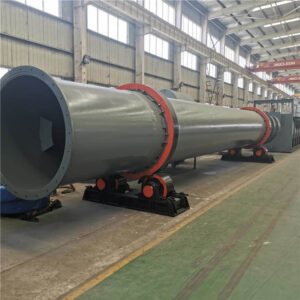
Feed dryer
The Best Choices for Your Project
Provide you with feed drying solutions
- Production capacity: 1-20T/H.
- Customizable diameter from 80cm to 3600cm.
- Dryer length: 8 meters to 36 meters.
Feed dryer
With the rapid development of global agriculture, the demand for feed is huge in both developed and developing countries. How to preserve the nutritional value and control the moisture content of feed has become an important challenge. The feed dryer was developed precisely to solve this problem.
A feed dryer uses hot air to dry feed materials. It can dry various types of feed such as fish feed, cattle feed, and sheep feed. The raw materials suitable for drying include soybean meal, corn, straw, and more.
As a specialized drying device, the feed dryer can precisely control the feed’s moisture content below 12%, effectively eliminating molds and insect eggs, and preventing hazards such as aflatoxin. Meanwhile, the drying temperature maximizes the preservation of proteins, vitamins, and other heat-sensitive nutrients, improving feed palatability and conversion efficiency.
Feed dryers are capable of operating continuously, 24 hours a day, 365 days a year, making large-scale feed drying possible.
| Model (mm) | Inclination (%) | Rotating Speed (r/min) | Inlet Temperature (℃) | Power (kW) | Volume (m³) | Capacity (t/h) | Weight (t) |
|---|---|---|---|---|---|---|---|
| Φ600×6000 | 3–5 | 3–8 | ≤700 | 3 | 1.69 | 0.5–1.5 | 2.9 |
| Φ800×8000 | 3–5 | 3–8 | ≤700 | 4 | 4.01 | 0.8–2.0 | 3.5 |
| Φ800×10000 | 3–5 | 3–8 | ≤700 | 4 | 5.02 | 0.8–2.5 | 4.5 |
| Φ1000×10000 | 3–5 | 3–8 | ≤700 | 5.5 | 7.85 | 1.0–3.5 | 5.6 |
| Φ1200×10000 | 3–5 | 3–8 | ≤700 | 7.5 | 11.30 | 1.8–5.0 | 14.5 |
| Φ1200×12000 | 3–5 | 3–8 | ≤700 | 11 | 13.56 | 2.0–6.0 | 14.8 |
| Φ1500×12000 | 3–5 | 2–6 | ≤800 | 15 | 21.19 | 3.5–9.0 | 17.8 |
| Φ1800×12000 | 3–5 | 2–6 | ≤800 | 18 | 30.52 | 5.0–12 | 25 |
| Φ2200×12000 | 3–5 | 1.5–6 | ≤800 | 18.5 | 45.59 | 6.0–15 | 33 |
| Φ2200×18000 | 3–5 | 1.5–6 | ≤800 | 22 | 68.38 | 10–18 | 53.8 |
| Φ2200×20000 | 3–5 | 1.5–6 | ≤800 | 30 | 75.98 | 12–20 | 56 |
| Φ2400×20000 | 3–5 | 1.5–5 | ≤800 | 37 | 90.43 | 18–30 | 60 |
| Φ3000×20000 | 3–5 | 1.5–5 | ≤800 | 55 | 141.3 | 25–35 | 78 |
Working Principle of Feed Dryer
The feed dryer applies hot air to dry feed. The combustion furnace generates the heat source, and hot air is continuously introduced into the drying machine to evaporate the feed’s moisture, achieving the drying effect.
There are three main types of feed dryers:
Rotary Drum Feed Dryer – Suitable for large-scale feed drying, with the widest range of applications. The rotation of the drum keeps the material constantly turning, ensuring uniform drying. This is the mainstream choice in the market.
Airflow Dryer – Suitable for small-scale feed drying, with production ranging from several dozen to several hundred kilograms.
Box-type Dryer – Suitable for high-moisture feed. However, the drying process takes longer and requires more electricity.
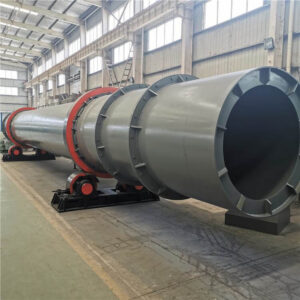
Features of Feed Dryer
We mainly manufacture rotary drum feed dryers and airflow dryers. Their main features include:
High Automation – Moisture content can be precisely controlled via computer systems, ensuring the final product meets requirements. The dryer supports various feed types, offers one-button start/stop, and stepless adjustment of temperature and airflow, greatly reducing labor and operational errors.
Efficient Heat Utilization – The feed dryer is designed with heat recovery and reuse, making use of residual heat. Compared to traditional equipment, it saves up to 30% energy costs.
Stable Quality – The core components of the dryer are made of 304 stainless steel, significantly extending the machine’s service life.
Environmental Compliance – Equipped with an automatic environmental protection system, the dryer operates with a closed dust removal structure, effectively reducing dust emissions.
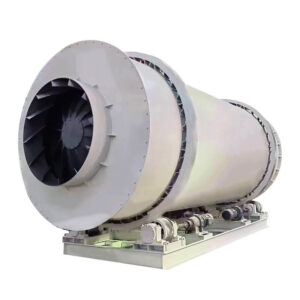
Advantages of Feed Dryer
The feed dryer quickly removes excess moisture from feed, achieving rapid drying compared to conventional methods, while also saving time, labor, and costs.
How to Choose the Right Feed Dryer
Determine Production Capacity – Clarify daily production output (tons per day) and working hours to select the right dryer size.
Determine Feed Material – Different feed types (fish feed, cattle feed, sheep feed, etc.) require different dryer configurations.
Determine Raw and Final Moisture Content – Selection depends on initial moisture levels and the required final moisture content.
Heat Source Options – Available options include coal, natural gas, biomass pellets, and electricity. The choice depends on cost-effectiveness and availability.
Why Choose Us as Your Feed Dryer Manufacturer?
We provide feed dryers with significant advantages in technology, cost, quality, and environmental protection:
Technical Advantages – Our dryers offer automation, high efficiency, energy saving, excellent drying effect, and wide applicability.
Environmental Advantages – The dryers feature a fully enclosed design to minimize dust leakage. Equipped with dust removal and deodorization systems, they fully meet environmental emission standards.
Quality Advantages – Manufactured with wear-resistant steel, with drum interiors specially treated to prevent material adhesion and ensure durability.
Customized Service – We provide tailored solutions according to different feed types, moisture levels, and production requirements, ensuring the most suitable drying system for each client.