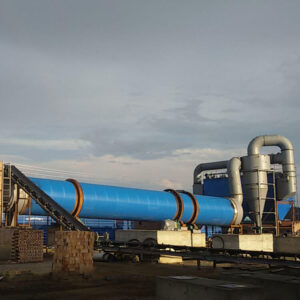
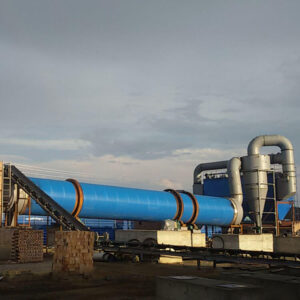
A rotary dryer is a highly efficient and versatile industrial drying machine designed to reduce the moisture content of various materials through direct or indirect heat transfer. Its robust design, featuring a rotating drum, makes it a cornerstone in processing lines across numerous sectors. This article provides an in-depth analysis of where and how rotary dryers are applied, the materials they process, and the advantages they offer.
Key Industries Using Rotary Dryers
Rotary dryers are indispensable in many industries where bulk material drying is a crucial production step.
Mining and Minerals: Widely used for drying ores, concentrates, sand, silica, limestone, clay, and gypsum. This is essential before further processing like smelting or transportation.
Agriculture: Ideal for drying grains (corn, wheat, rice), soybeans, distiller’s dried grains with solubles (DDGS), and animal feed pellets to ensure safe storage and prevent spoilage.
Chemical and Fertilizer: Used for drying various chemicals, salts (like sodium chloride), phosphates, NPK fertilizers, and other compound fertilizers to improve flowability and stability.
Food Processing: Applied to dry food by-products, sugar beet pulp, fruits, vegetables, and starches, meeting strict hygiene and quality standards.
Biomass and Biofuel: Crucial for drying wood chips, sawdust, bark, and other biomass materials to increase their calorific value for pelletizing or direct combustion.
Environmental and Waste Management: Used in drying municipal sewage sludge, industrial sludge, and other waste streams, reducing volume and weight for easier disposal or conversion into fuel.
Materials Suitable for Rotary Drying
Rotary dryers can handle a vast range of materials, typically in particulate or granular form. Suitable materials include:
Ores and Minerals: Iron ore, copper concentrate, bauxite, kaolin, bentonite.
Agricultural Products: Cereals, oilseeds, alfalfa, tobacco leaves.
Chemical Substances: Polymers, pigments, sodium sulfate, calcium carbonate.
Organic Wastes: Manure, compost, filter cakes, brewery spent grain.
Aggregates and Sands: Silica sand, foundry sand, river sand.
Materials that are free-flowing and can be tumbled without significant degradation are ideal for rotary drying.
Benefits of Using a Rotary Dryer for These Materials
Using a rotary dryer offers significant advantages over other drying methods:
High Efficiency and Large Capacity: The tumbling action in the drum exposes a large surface area of the material to the hot gas, resulting in rapid and uniform drying, capable of handling high throughput.
Robustness and Reliability: Built with heavy-duty materials, rotary dryers are designed for continuous operation under harsh conditions with minimal downtime.
Versatility: They can process a wide range of material sizes and moisture contents by adjusting parameters like drum speed, air flow, and temperature.
Improved Product Quality: Gentle and consistent drying prevents overheating and ensures a uniform final product with the desired moisture specification.
Cost-Effectiveness: Their durability and high efficiency lead to lower operational costs per ton of material processed over the long term.
Heat Source Options for Rotary Dryers
The choice of heat source is critical and depends on fuel availability, cost, and product requirements. Common options include:
Natural Gas or Propane: A clean and widely available option, offering precise temperature control.
Fuel Oil: A traditional choice for high-temperature applications.
Coal: A cost-effective solution in regions where it is abundant, though it requires more complex handling and emission control systems.
Biomass/Solid Fuels: Using wood waste, straw, or other biomass provides a sustainable and often low-cost heating alternative.
Steam: Used in indirect rotary dryers where the product must not contact combustion gases, ideal for sensitive materials.
Electricity: Used for smaller units or where other fuels are not practical, though often less economical for large-scale drying.
Waste Heat: Utilizing hot exhaust gases from other processes (e.g., kilns, engines) can dramatically improve overall plant energy efficiency.
Customized Rotary Dryer Solutions for Your Application
We understand that every client’s drying needs are unique. Based on your specific application, material characteristics, and production goals, we provide fully customized rotary dryer solutions. Our services include:
Application Analysis: We evaluate your material’s properties (initial moisture, final moisture, particle size, heat sensitivity) to determine the optimal dryer design.
Tailored Design: We offer direct-fired, indirect-fired, or steam tube dryers, with customizations in drum size, flight design, and internal components to maximize efficiency for your material.
Heat Source Integration: We help you select the most economical and suitable heat source and integrate it seamlessly into the dryer system.
Auxiliary System Supply: We provide a complete package, including feed systems, discharge systems, dust collectors, and control panels for a turnkey solution.
Expert Support: Our team offers ongoing technical support, from installation and commissioning to maintenance and spare parts.
Conclusion
The rotary dryer is a versatile and powerful workhorse for industrial drying. Its application spans from traditional mining to modern biomass processing. By understanding the material properties and leveraging the right configuration and heat source, a rotary dryer can significantly enhance your production efficiency and product quality.
Contact us today to discuss your specific drying requirements and let our experts provide you with a tailored rotary dryer solution that drives your business forward.

