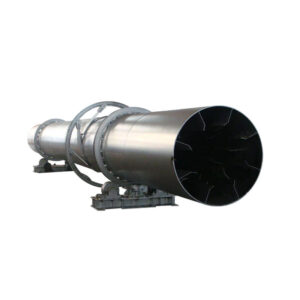
The drum drying process is a highly efficient and continuous method for removing moisture from liquid or slurry-based products. Also known as roller drying, it is a cornerstone technology in industries ranging from food and chemicals to pharmaceuticals. This guide will explain what a drum dryer is, detail the drying process, explore how to maximize its efficiency, and discuss the available automation and customization options.
What is a Drum Dryer?
A drum dryer is a industrial drying system that consists of one or more heated, rotating metal cylinders (drums). A liquid or semi-liquid feedstock is applied in a thin film onto the outer surface of the drum. As the drum rotates, the intense heat from within the drum (typically supplied by steam) rapidly evaporates the moisture from the product. A stationary knife then scrapes the dried solid film from the drum, resulting in flakes, powders, or sheets of the final product.
Key advantages of drum dryers include:
High Thermal Efficiency: Direct contact with the heated surface allows for rapid heat transfer.
Continuous Operation: Suitable for large-scale, uninterrupted production.
Gentle on Products: Short contact time preserves the quality of heat-sensitive materials.
Compact Footprint: Offers a high drying capacity relative to its size.
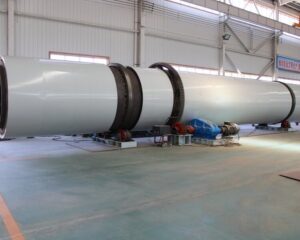
The Detailed Drum Drying Process
The drum drying process is a continuous cycle that can be broken down into several key stages:
Feed Application: The liquid or slurry feedstock is evenly applied to the surface of the rotating drum(s). This can be done through various methods such as dip feeding, splash feeding, or using an applicator roller, ensuring a uniform thin film.
Heating and Evaporation: The drum, heated internally by pressurized steam, transfers its thermal energy to the product film. The moisture in the product rapidly evaporates as the drum rotates. The drying is typically completed within one revolution (anywhere from 5 seconds to 2 minutes).
Drying and Formation: As the drum continues to turn, the product transitions from a wet paste to a fully dried solid layer. The properties of this final layer (e.g., porosity, density) can be controlled by adjusting drum speed and temperature.
Product Discharge: Once the drum has rotated nearly full circle, a precisely adjusted scraper blade (doctor blade) removes the dried product in a continuous sheet or flake form.
Product Collection and Sizing: The discharged material is conveyed to a collection system, often followed by a milling or grinding step to achieve the desired particle size for packaging or further processing.
How to Maximize Drum Dryer Drying Efficiency
Achieving the highest possible efficiency in the drum drying process is crucial for reducing operational costs and improving product quality. Here are the key strategies:
Optimize Feedstock Properties: Pre-concentrating the feed reduces the amount of water that needs to be evaporated, significantly saving energy.
Precise Control of Drum Temperature and Speed: Finding the perfect balance between steam temperature and drum rotation speed is critical. Too high a temperature can burn the product, while too slow a speed reduces throughput.
Maintain Optimal Steam Pressure and Condensate Removal: Efficient heat transfer relies on consistent high-pressure steam and the rapid removal of condensate from inside the drum to prevent a thermal barrier from forming.
Ensure a Uniform and Thin Product Film: A consistent, thin film allows for fast and uniform drying. The feed application system must be meticulously maintained.
Effective Vapor Exhaust and Hood Insulation: Quickly removing the evaporated moisture from the drying hood prevents condensation and allows the process to continue efficiently. Proper hood insulation minimizes heat loss to the environment.
Regular Maintenance: Keeping the drum surface smooth and the doctor blade sharp ensures continuous and clean product discharge, preventing re-wetting and downtime.
Drum Drying Process Automation Levels
The automation level of a drum drying process is highly flexible and can be tailored to the client’s specific production needs and budget.
Basic Manual Control: Involves manual setting of steam valves and drum speed. Suitable for small-scale operations or products with very stable specifications.
Semi-Automated Control (PLC-based): This is the most common level. A Programmable Logic Controller (PLC) automatically maintains setpoints for temperature, speed, and feed rate, ensuring consistent product quality and providing basic data logging.
Fully Automated with SCADA/HMI: Integrated with a Supervisory Control and Data Acquisition (SCADA) system and a Human-Machine Interface (HMI). This allows for complete recipe management, remote monitoring, advanced data analytics, and integration with plant-wide management systems (MES/ERP). It enables predictive maintenance and optimizes efficiency in real-time.
We can customize the drum drying process automation to your exact requirements, from a simple control panel to a fully integrated, smart factory solution.
Custom-Made Drum Drying Solutions
At our company, we understand that no two drying challenges are the same. A one-size-fits-all approach does not work. Therefore, we specialize in designing and manufacturing custom drum dryers to meet the unique demands of your product and production goals.
Our customization options include:
Single or Double Drum Configuration: We will recommend the best setup for your material’s viscosity and drying characteristics.
Drum Size and Surface Finishing: Drums can be manufactured in various diameters and lengths, with specialized surface treatments (e.g., chrome plating) for specific product release or hygiene requirements.
Feeding System Design: We design the optimal feed system (applicator roller, splasher, etc.) for your specific feedstock.
Construction Materials: We use materials of construction (e.g., stainless steel 304/316) that are compatible with your product, especially for corrosive or food/pharmaceutical-grade applications.
Auxiliary System Integration: We can design the complete system, including feed tanks, product conveyors, mills, and dust collection systems.
Contact us today to discuss your project. We will engineer a drum drying solution that maximizes your productivity, efficiency, and final product quality.