
Industrial biomass dryer
The Best Choices for Your Project
- Customization Service:The maximum customizable diameter is 3.5 meters
- Solution:Provide solutions for your problems
- Dryer length: 8 meters to 50 meters.
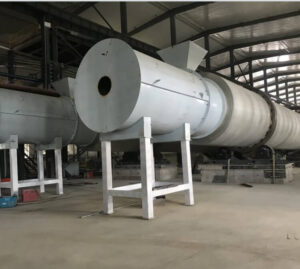
Industrial biomass dryer
An Industrial Biomass Dryer is a large-scale machine designed to efficiently reduce the moisture content of bulk biomass materials. By removing excess water through the application of heat and airflow, these dryers transform wet, raw biomass into a stable, high-quality, and energy-dense product. This process is a critical pre-treatment step in numerous industries, enhancing the biomass’s value, shelf life, and performance in subsequent applications.
General Dryer Specifications & Common Parameters
This table covers the core parameters applicable to most dryer types.
| Parameter Category | Specification | Details & Examples |
|---|---|---|
| Dryer Type | Rotary Drum Dryer / Belt Dryer / Flash Dryer / Fluidized Bed Dryer | Selection depends on material characteristics (e.g., particle size, abrasiveness) and process requirements. |
| Application | Drying of biomass for: Biofuel production (pellets, briquettes), Animal Bedding, Co-firing in power plants, etc. | |
| Biomass Feedstock | Sawdust, Wood Chips, Bark, PKS (Palm Kernel Shell), Bagasse, Straw, MSW (Municipal Solid Waste) | The feedstock dictates the dryer design (e.g., abrasion resistance). |
| Input Moisture Content (wt.) | 40% – 60% (Typical for green wood waste) | Can be higher for certain agricultural residues. |
| Output Moisture Content (wt.) | 10% – 15% (Standard for pelletizing) | Can be adjusted based on final product requirements (e.g., <10% for combustion). |
| Evaporation Capacity | 1,000 kg/h to 20,000 kg/h (or more) | The mass of water removed per hour. A key sizing parameter. |
| Thermal Energy Source | Natural Gas, Propane, Biomass Syngas, Hot Oil, Steam, Direct Firing of Biomass | Choice impacts operational cost and system complexity. |
| Specific Energy Consumption | 3,000 – 4,500 kJ per kg of water evaporated | Highly efficient dryers are at the lower end of this range. |
| Control System | PLC (Programmable Logic Controller) with HMI (Human-Machine Interface) | Allows for automated control of temperature, feed rate, and moisture. |
| Safety Features | Spark/Ember Detection & Extinguishing System, Oxygen Monitoring, Temperature Sensors, Emergency Stop, Explosion Vents | Critical for biomass due to fire and explosion risks from dust. |
Table 2a: Specific Model – Rotary Drum Dryer (Example: Model “BioDry-RD-5000”)
Rotary dryers are a workhorse in the industry, suitable for a wide range of particulate biomass.
| Parameter Category | Specification | Notes |
|---|---|---|
| Model Designation | BioDry-RD-5000 | Naming often includes evaporation capacity (e.g., 5000 kg/h). |
| Dryer Type | Single-Pass, Direct-Fired, Co-Current Rotary Drum | Co-current design protects wet material from high inlet temperatures. |
| Evaporation Capacity | 5,000 kg H₂O/h | |
| Dry Material Output | ~ 8,000 – 9,500 kg/h (depending on initial moisture) | |
| Drum Dimensions | Diameter: 3.2 m, Length: 20 m | |
| Inlet Gas Temperature | 600 – 800 °C (Max) | Controlled to prevent pyrolysis/combustion of biomass. |
| Outlet Gas Temperature | 90 – 120 °C | |
| Rotation Speed | 3 – 8 rpm (adjustable) | Controls residence time of the material inside the drum. |
| Drive Power | 75 kW (Main motor) | |
| Required Footprint | ~ 25 m (L) x 8 m (W) | Includes drum, furnace, and ancillary equipment. |
| Dust Emission Control | Cyclone + Baghouse Filter | Ensures compliance with air quality standards. |
Table 2b: Specific Model – Belt Dryer (Example: Model “BioDry-BT-2000”)
Belt dryers are gentler and ideal for sensitive, flaky, or fibrous materials that cannot be tumbled.
| Parameter Category | Specification | Notes |
|---|---|---|
| Model Designation | BioDry-BT-2000 | |
| Dryer Type | Multi-Pass, Conveyor Belt Dryer | Material is gently conveyed on multiple tiers. |
| Evaporation Capacity | 2,000 kg H₂O/h | |
| Dry Material Output | ~ 3,500 kg/h (depending on initial moisture) | |
| Number of Belts / Stages | 3 Belts / 2 Heating Zones + 1 Cooling Zone | Allows for staged drying with different air temperatures. |
| Belt Width / Total Length | 4 m / ~40 m (total conveyor length) | |
| Drying Air Temperature | Zone 1: 130-160°C, Zone 2: 80-110°C | Temperature is reduced in later stages to prevent overdrying. |
| Heat Source | Hot Water (90/70°C) or Low-Pressure Steam | Indirect heating minimizes fire risk and product contamination. |
| Air Flow | Forced Convection with recirculation | Recirculation improves thermal efficiency. |
| Drive Power | 25 kW (Total for conveyor and fans) | |
| Required Footprint | ~ 15 m (L) x 6 m (W) x 8 m (H) | Multi-level design has a smaller footprint but greater height. |
| Construction | Modular, insulated stainless steel panels | Ensures hygiene and durability. |
Table 3: Optional & Ancillary Equipment
| Component | Description | Importance |
|---|---|---|
| Biomass Feeding System | Live Bottom Bin, Screw Feeder, Belt Feeder | Provides a consistent and controllable feed to the dryer. |
| Heat Generator | Biomass Gasifier or Thermal Oil Heater | Allows the use of raw biomass or other fuels to generate heat. |
| Cyclone Separator | Primary product/air separation. | Recovers fine dried product from the exhaust air stream. |
| Baghouse Filter / Wet Scrubber | Final dust cleaning of exhaust gas. | Mandatory for environmental compliance. |
| Cooling Screw / Conveyor | Cools the dried product before storage. | Prevents condensation and potential self-heating in storage. |
| Energy Recovery System | Pre-heats incoming combustion air with exhaust. | Significantly reduces fuel consumption and improves efficiency. |
Important Note: The specifications above are representative examples. Actual requirements and dryer configurations must be determined through a detailed analysis of your specific biomass feedstock, plant capacity, and site conditions by a qualified engineering team.
Standard Model Overview Table
| Model | Drum Diameter (m) | Drum Length (m) | Capacity (Raw Manure, Wet Base)* | Evaporation Capacity (kg H₂O/h) | Power (kW) | Final Moisture |
|---|---|---|---|---|---|---|
| CMD-1212 | 1.2 | 12 | 0.8 – 1.2 ton/day | 100 – 150 | 15 | Adjustable |
| CMD-1515 | 1.5 | 15 | 2.5 – 3.5 ton/day | 300 – 450 | 22 | 10% – 15% |
| CMD-1818 | 1.8 | 18 | 4.5 – 6.0 ton/day | 600 – 800 | 30 | Adjustable |
| CMD-2222 | 2.2 | 22 | 8.0 – 10.0 ton/day | 1100 – 1400 | 45 | 10% – 15% |
| CMD-2525 | 2.5 | 25 | 12.0 – 15.0 ton/day | 1600 – 2000 | 55 | Adjustable |
| CMD-2828 | 2.8 | 28 | 18.0 – 22.0 ton/day | 2300 – 2800 | 75 | 10% – 15% |
*Note on Capacity: Capacity is estimated based on reducing moisture from ~80% to ~13%. Actual output can vary based on initial moisture, manure composition, and heat source.
Key Requirements for Biomass Raw Materials
For optimal drying performance and final product quality, the biomass feedstock should meet certain requirements:
Initial Moisture Content: The dryer must be sized and selected based on the incoming moisture level (e.g., from 50% down to 10-15%).
Particle Size and Uniformity: Consistent particle size ensures even drying and prevents blockages in the system.
Bulk Density: This affects the loading capacity and heat transfer efficiency.
Thermal Sensitivity: Some materials are sensitive to high temperatures and require low-temperature drying to avoid degradation.
Applications of Dried Biomass
Drying significantly increases the utility and value of biomass, making it suitable for:
Biofuel Production: Dried biomass is essential for producing high-quality wood pellets, briquettes, and other solid biofuels, as it improves combustion efficiency and binding.
Animal Feed: Drying preserves nutrients and prevents mold in feed ingredients like alfalfa and distiller’s grains.
Co-firing in Power Plants: Dry biomass can be mixed with coal to reduce emissions and improve combustion efficiency.
Composting: Drying sludge to the correct moisture level accelerates the composting process.
Chemical Extraction: Dry biomass is often better for extracting oils, resins, and other compounds.
How Does an Industrial Biomass Dryer Work?
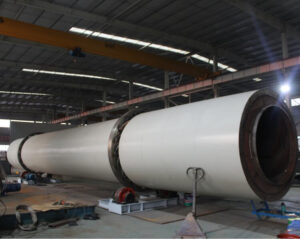
The most common and efficient type is the Rotary Drum Dryer. Its working principle is as follows:
Feeding: Wet biomass is continuously fed into the rotating drum.
Heat Exchange: A hot air generator (using gas, biomass, or steam) produces hot gases that flow through the drum.
Material Movement: As the drum rotates, internal flights lift and cascade the biomass through the hot gas stream, maximizing the surface area for heat transfer.
Moisture Evaporation: The heat causes the moisture within the biomass to evaporate.
Discharge: The dried biomass is discharged at the other end, while the moist exhaust gas is treated and released.
Features and Advantages of Our Industrial Biomass Dryer
High Thermal Efficiency: Advanced design ensures maximum heat transfer, reducing fuel consumption.
Robust Construction: Built with durable materials to withstand abrasive biomass materials and ensure long service life.
Intelligent Control System: Automated PLC controls maintain consistent temperature and moisture output for a uniform final product.
Gentle Drying: The tumbling action in a rotary dryer ensures gentle handling, preventing excessive material breakdown.
High Capacity: Designed for continuous, 24/7 operation to meet large-scale industrial demands.
How Does an Industrial Biomass Dryer Achieve Environmental Benefits?
Our dryers are designed with sustainability at their core:
Reduced Emissions: Dry biomass burns more cleanly and efficiently, significantly reducing greenhouse gas emissions when used as fuel.
Waste-to-Energy: The dryer itself can often be fueled by biomass waste or biogas, creating a closed-loop, carbon-neutral system.
Dust Control Systems: Integrated bag filters and cyclones capture particulate matter from the exhaust, preventing air pollution.
Waste Reduction: By converting wet, low-value waste (like sludge and agricultural residues) into valuable resources, we support a circular economy.
Custom-Made Industrial Biomass Dryer Solutions
We understand that every client’s biomass and production goals are unique. We specialize in providing fully customized drying solutions. Our engineering team will work with you to design an Industrial Biomass Dryer that meets your specific requirements, including:
Capacity and Throughput: Tailored to your daily or annual production needs.
Fuel Source: Configured to run on the most efficient and cost-effective fuel available to you.
Moisture Reduction: Designed to achieve your target final moisture content.
Spatial Constraints: Optimized layout to fit within your existing facility.
Contact us today for a free consultation. Let our experts help you find the most efficient and profitable biomass drying solution for your business.