
Industrial Waste Drying Equipment
Efficient Drying Solutions for Industrial Waste Processing
Industrial waste often contains high moisture content, which increases transportation costs and makes further processing more difficult. Industrial waste drying equipment plays an important role in reducing moisture, improving material handling, and preparing waste materials for recycling, combustion, or further utilization.
A rotary drum dryer is widely used in industrial waste treatment because of its large processing capacity, continuous operation, and adaptability to different materials.
Our industrial drying systems can be customized according to material characteristics, moisture content, capacity requirements, and final application.
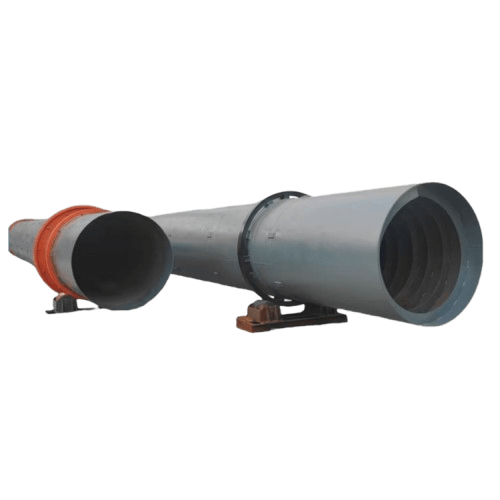
Table of Contents
Rotary Dryer for Industrial Waste Treatment
Industrial waste drying equipment can be used for drying different types of waste materials, including:
1. Industrial Sludge Drying
Sludge from wastewater treatment plants usually contains high moisture content. Drying can reduce volume, lower transportation costs, and improve disposal efficiency.
Applications:
- Municipal sludge
- Industrial wastewater sludge
- Paper mill sludge
- Food processing sludge
2. Biomass Waste Drying
Many agricultural and forestry wastes require moisture reduction before further processing.
Suitable materials:
- Sawdust
- Wood chips
- Rice husk
- Straw
- Corn stalk
- Bagasse
- Peanut shell
- Coconut shell
Drying improves combustion efficiency and is also suitable for biomass pellet production and biochar processing.
3. Chemical and Mineral Waste Drying
For some industrial by-products, moisture control is necessary before storage or reuse.
Suitable materials:
- Chemical residues
- Mineral powders
- Fertilizer materials
- Industrial by-products
Rotary Dryer for Industrial Waste Treatment
A rotary dryer is one of the most common solutions for industrial waste drying.
Main Advantages:
Continuous Operation
The rotary drum dryer can operate continuously, making it suitable for large-scale industrial production.
High Drying Efficiency
Hot air contacts with wet materials inside the rotating drum, allowing efficient heat transfer and moisture evaporation.
Flexible Capacity
The drying capacity can be customized according to customer requirements.
Wide Material Adaptability
The system can handle different materials with various particle sizes and moisture levels
Industrial Waste Drying Process
The typical drying process includes:
Wet Material Feeding → Heat Source System → Rotary Drum Drying → Dust Collection → Dry Material Discharge
According to different materials, the system can be equipped with:
- Feeding system
- Hot air furnace
- Rotary dryer
- Cyclone dust collector
- Bag filter
- Exhaust gas treatment system
- Automatic control system
Customized Industrial Drying Equipment
Different industrial wastes have different characteristics, such as:
- Moisture content
- Particle size
- Density
- Heat sensitivity
- Required final moisture
Therefore, selecting suitable drying equipment is important.
We provide customized solutions based on:
- Material testing
- Required capacity
- Available energy source
- Installation conditions
Why Choose Our Industrial Waste Drying Equipment?
Customized drying solutions
✔ Suitable for various industrial waste materials
✔ Continuous and stable operation
✔ Energy-efficient drying process
✔ Easy maintenance design
✔ Support complete drying system integration
Drum Dryer for Wood Chips and Sawdust
Wood chips and sawdust have different bulk densities and particle sizes, so the drying system should be designed accordingly.
For lightweight materials such as sawdust, the airflow and drum structure need to be considered carefully to prevent excessive material carryover.
For larger wood chips, the residence time and lifting structure inside the drum become important factors.
A complete wood drying system may include:
Wood Preparation → Feeding → Hot Air Furnace → Rotary Drum Dryer → Cyclone → Dust Collection → Dried Wood
The required dryer size depends on:
- Feed capacity
- Initial moisture
- Target moisture
- Particle size
- Bulk density
- Inlet air temperature
- Outlet temperature
- Operating hours
Drum Dryer for Iron Ore Fines
Rotary drum dryers are also widely applicable to mineral drying.
For example, iron ore fines may need to be dried before further processing, storage or transportation.
The system can be designed according to:
- Feed capacity
- Initial moisture
- Required outlet moisture
- Particle size
- Fuel type
- Available space
- Exhaust gas requirements
For mineral applications, the drying temperature should be controlled according to the characteristics of the ore.
A dust collection system is also important because fine mineral particles can be carried with the exhaust gas.
Drum Dryer Heating Systems
The heating system is an important part of a rotary drum dryer.
Different projects can use different heat sources.
Biomass-Fired Furnace
Biomass fuel can be used where locally available biomass is economical.
Natural Gas
Natural gas provides relatively clean combustion and convenient temperature control where gas infrastructure is available.
LPG
LPG can be used for projects requiring a flexible gaseous fuel source.
Diesel / LDO
Diesel or LDO-fired systems can be selected where liquid fuel is readily available.
Coal
Coal-fired hot air furnaces can be considered for projects where coal is economical and permitted.
The heating system should be selected together with the dryer rather than considered separately.
How to Select the Right Drum Dryer
hoosing the correct drum dryer requires more information than simply knowing the desired capacity.
Before selecting the machine, we normally need to understand:
Material
What material needs to be dried?
Feed Capacity
How many tons or kilograms per hour need to be processed?
Initial Moisture
What is the moisture content before drying?
Final Moisture
What moisture content is required after drying?
Particle Size
What is the typical particle size and distribution?
Bulk Density
Is the material heavy, lightweight, powdery or fibrous?
Heat Source
What fuel is available at the project site?
Operating Hours
How many hours per day will the dryer operate?
Site Conditions
What space is available for the complete drying system?
These parameters are used to determine the required evaporation capacity, drum size, heating capacity and auxiliary equipment.
Customized Drum Dryer Solutions
A standard drum dryer cannot necessarily provide the same performance for every material.
For example, a dryer for iron ore fines may have very different requirements from a dryer for sawdust or agricultural residues.
Customization may involve:
- Drum diameter
- Drum length
- Drum rotation speed
- Internal lifting flights
- Drying residence time
- Hot air temperature
- Heating furnace
- Fuel system
- Feeding system
- Dust collection
- Exhaust system
- Electrical control
- Material of construction
The goal is to match the drying system with the actual production conditions.
Complete Drum Dryer System
| Equipment | Function |
|---|---|
| Feeding Hopper | Stores and feeds wet material |
| Conveyor | Transfers material |
| Hot Air Furnace | Generates drying heat |
| Rotary Drum | Main drying equipment |
| Cyclone | Separates larger dust particles |
| Bag Filter | Fine dust collection |
| Exhaust Fan | Maintains airflow |
| Discharge Conveyor | Transfers dried material |
| Control Cabinet | Controls motors and operating parameters |
Advantages of Rotary Drum Dryers
Rotary drum dryers are often selected for industrial applications because they can provide:
- Continuous operation
- High material throughput
- Flexible heat-source options
- Relatively simple mechanical structure
- Adaptability to different bulk materials
- Long operating life when properly maintained
- Integration with automatic feeding and discharge
- Compatibility with complete production lines
For large-capacity applications, the dryer can also be integrated with automated material handling and dust collection systems.
Drum Dryer Supplier and Manufacturer
When choosing a drum dryer supplier, it is important to consider more than the machine price.
A suitable supplier should understand the relationship between the material and the drying process.
Important factors include:
- Previous experience with similar materials
- Actual drying capacity
- Moisture removal capability
- Heat consumption
- Fuel requirements
- Dust collection
- Equipment dimensions
- Electrical power
- Installation requirements
- Spare parts
- Technical support
A proper drying solution should be based on the actual material data and production requirements.
FAQ – Drum Dryer
What is a drum dryer?
A drum dryer is a continuous industrial drying machine that uses a rotating cylindrical drum and hot air to reduce moisture in bulk materials.
Is a drum dryer the same as a rotary dryer?
In many industrial applications, the terms drum dryer and rotary dryer are used to describe similar equipment. The exact design can vary depending on the application.
What materials can a drum dryer dry?
It can be used for suitable biomass, agricultural products, minerals, chemicals, fertilizers, feed materials and other bulk solids.
Can a drum dryer use natural gas?
Yes. A natural-gas-fired hot air furnace can be configured for suitable applications.
Can a drum dryer use biomass fuel?
Yes. Biomass-fired heating systems can be designed where biomass fuel is available and suitable.
How do I select the drum dryer capacity?
Capacity should be calculated based on feed rate, initial moisture, final moisture, material characteristics and operating conditions.
Can the dryer be customized?
Yes. The drum dimensions, heating system, lifting flights, feeding system, dust collection and other components can be configured according to the project.