
Rotary Dryer for Peanut Shell
Industrial Rotary Dryer for Peanut Shell Drying
Peanut shells are a common agricultural biomass material generated from peanut processing industries. Due to their high moisture content after collection, peanut shells usually require an efficient drying process before further utilization, such as biomass pellet production, briquette manufacturing, boiler fuel, animal bedding, or biochar production.
Our Rotary Dryer for Peanut Shell is specially designed for continuous drying of agricultural biomass materials. It can effectively reduce moisture content, improve combustion efficiency, and provide stable raw material conditions for downstream processing.
The drying system adopts a rotary drum structure with hot air circulation. Through continuous lifting, tumbling, and heat exchange inside the drum, wet peanut shells can achieve uniform drying with high efficiency and low energy consumption.
We provide customized peanut shell drying solutions according to:
- Raw material moisture content
- Required final moisture
- Processing capacity
- Available heat source
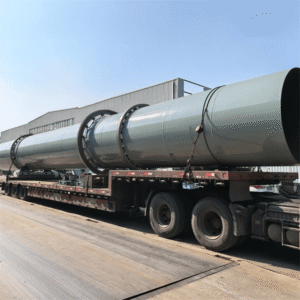
Table of Contents
Why Peanut Shells Need Drying Before Processing?
Peanut shells normally contain moisture after collection and storage. High moisture content can cause several problems:
1. Lower Fuel Efficiency
Wet peanut shells require more energy during combustion or carbonization because additional heat is consumed for water evaporation.
2. Difficult Pellet and Briquette Production
For biomass pellet or briquette production, excessive moisture affects:
- Material compression
- Product strength
- Production stability
3. Storage Problems
High moisture biomass is more likely to:
- Develop mold
- Reduce storage time
- Affect product quality
4. Unstable Carbonization Process
For peanut shell biochar production, proper drying helps achieve:
- Stable pyrolysis temperature
- Higher carbonization efficiency
- Better charcoal quality
Therefore, an industrial peanut shell drying machine is an important part of biomass processing systems.
Working Principle of Rotary Dryer for Peanut Shell
The peanut shell rotary dryer mainly consists of:
- Feeding system
- Rotary drum
- Hot air furnace
- Dust collection system
- Discharge system
- Control system
The working process:
Step 1: Feeding
Wet peanut shells are continuously fed into the rotary drum through a conveyor or feeding device.
Step 2: Heat Exchange
Inside the rotating drum, lifting plates continuously lift and scatter the peanut shells.
The biomass material contacts with hot air repeatedly, allowing moisture to evaporate quickly.
Step 3: Moisture Removal
The humid air is discharged through the exhaust system after passing through dust removal equipment.
Step 4: Dry Material Discharge
The dried peanut shells are collected at the outlet and can be sent to:
- Pellet machine
- Briquette machine
- Carbonization furnace
- Storage system
Advantages of Our Peanut Shell Rotary Dryer
1. High Drying Efficiency
The rotary drum design provides large heat exchange space and continuous operation.
Suitable for:
- Peanut shells
- Sawdust
- Rice husk
- Wood chips
- Agricultural waste
2. Customized Capacity Design
Different models can be designed according to customer requirements.
Typical processing capacity:
- 500 kg/h
- 1 ton/h
- 2 ton/h
- 5 ton/h
- More
(The final capacity depends on moisture content and drying requirements.)
3. Multiple Heat Source Options
The rotary dryer can be equipped with different heating systems:
Biomass Furnace
Using waste biomass as fuel can reduce operating costs.
Natural Gas Burner
Suitable for areas requiring clean operation.
Diesel / Heavy Oil Burner
Available for customers with specific fuel requirements.
Coal Furnace
Suitable for regions where coal resources are available.
4. Energy Saving Design
The drying system can include:
- Hot air circulation design
- Temperature control system
- Dust collection system
- Optimized airflow design
to improve thermal efficiency.
5. Continuous Automatic Operation
Compared with traditional batch dryers, rotary dryers provide:
✔ Continuous feeding
✔ Continuous drying
✔ Stable output
✔ Less manual operation
Application of Peanut Shell Dryer
Peanut Shell for Biomass Fuel
Dried peanut shells can be used for:
- Biomass pellets
- Biomass briquettes
- Industrial boiler fuel
Drying improves:
- Heating value
- Combustion stability
- Storage performance
Peanut Shell for Biochar Production
Peanut shells are also suitable raw materials for biochar production.
Before carbonization, drying helps control:
- Feedstock moisture
- Carbonization temperature
- Production efficiency
A complete peanut shell biochar production line usually includes:
Peanut Shell → Crushing → Drying → Carbonization → Cooling → Packing
Peanut Shell for Animal Bedding
After drying and processing, peanut shells can be used as agricultural materials.
Peanut Shell Drying System Configuration
| Equipment | Function |
|---|---|
| Feeding Conveyor | Transport wet peanut shells |
| Rotary Dryer Drum | Main drying equipment |
| Hot Air Furnace | Provide drying heat |
| Cyclone Separator | Collect dust particles |
| Exhaust Fan | Remove humid air |
| Control Cabinet | Automatic operation control |
| Discharge Conveyor | Transport dried material |
Technical Parameters
| Model | Capacity | Moisture Reduction |
|---|---|---|
| Small Rotary Dryer | 300-800 kg/h | Customized |
| Medium Rotary Dryer | 1-3 ton/h | Customized |
| Large Rotary Dryer | 5 ton/h+ | Customized |
Customized Peanut Shell Drying Solution
Different peanut shell conditions require different dryer designs.
Before quotation, we usually evaluate:
Raw Material Information
- Initial moisture content
- Final moisture requirement
- Particle size
- Bulk density
Production Requirements
- Processing capacity per hour
- Working hours per day
- Available energy source
Factory Conditions
- Installation space
- Local climate
- Environmental requirements
Based on this information, we provide a suitable rotary drying solution.
Complete Peanut Shell Processing Line
For customers who want complete utilization of peanut shells, we can provide:
Peanut Shell Pellet Production Line
Process:
Peanut Shell
→ Crushing
→ Drying
→ Pelletizing
→ Cooling
→ Packing
Peanut Shell Biochar Production Line
Process:
Peanut Shell
→ Crushing
→ Drying
→ Carbonization
→ Cooling
→ Packing
We provide equipment design, layout drawings, installation guidance, and technical support.
FAQ
What moisture content is suitable for peanut shell drying?
Generally, peanut shells need to be dried according to the final application.
For pellet production, lower moisture is usually required.
For carbonization, controlling moisture helps improve carbonization efficiency.
Can the rotary dryer dry other biomass materials?
Yes.
The same dryer can be used for:
- Peanut shell
- Coconut shell
- Rice husk
- Sawdust
- Wood chips
- Straw
- Agricultural waste
What heat source can be used for peanut shell dryer?
The dryer can use:
- Biomass fuel
- Natural gas
- Diesel
- Coal
depending on customer requirements.
How long is the service life of the rotary dryer?
With proper operation and maintenance, industrial rotary dryers can provide long-term stable operation.
Conclusion
The Rotary Dryer for Peanut Shell is an efficient solution for agricultural biomass drying. It helps reduce moisture content, improve fuel performance, and prepare peanut shells for pellet production, briquette manufacturing, and biochar processing.
With customized design, suitable heating systems, and complete technical support, we provide reliable peanut shell drying equipment for biomass processing projects worldwide.