
Drum Dryer for Sludge
The Best Choices for Your Project
- Customization Service:The maximum customizable diameter is 3.5 meters
- Solution:Provide solutions for your problems
- Dryer length: 8 meters to 50 meters.
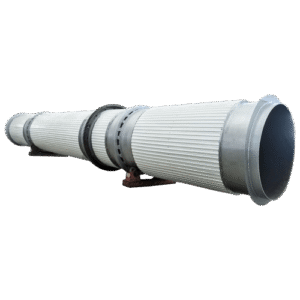
Drum Dryer for Sludge
A Drum Dryer for Sludge, often referred to as a rotary drum dryer for sludge, is an industrial drying system designed to significantly reduce the moisture content of various types of sludge. Sludge, a semi-solid by-product from wastewater treatment plants, industrial processes, or municipal facilities, is fed into a rotating drum where it is heated and dried. This process transforms wet, bulky, and often hazardous sludge into a stable, dry, granular material that is easier, safer, and more cost-effective to handle, transport, dispose of, or reuse.
he working principle of a sludge drum dryer involves indirect or direct heat transfer within a rotating cylinder to evaporate moisture. Here’s a step-by-step breakdown of how it dries the sludge:
Feeding: Wet sludge (with moisture content typically 80% or higher) is fed into the system. A specialized feeder, like a screw conveyor or pump, ensures a consistent and controlled feed rate into the inclined rotating drum.
Lifting and Showering: As the drum rotates, a series of internal fins (lifting flights) pick up the sludge and cascade it down in a “curtain-like” manner throughout the drum’s cross-section.
Heat Transfer & Drying:
Direct Heating: Hot air or combustion gases (from a burner using natural gas, diesel, etc.) flow through the drum, directly contacting the showering sludge. This is the most common method for high-capacity drying.
Indirect Heating: Hot thermal oil or steam circulates in a jacket around the drum, heating the shell, which then transfers heat to the sludge inside. This method is used for more sensitive or potentially explosive sludges.
Moisture Evaporation: The intense heat and the large surface area created by the cascading action cause the water in the sludge to evaporate rapidly.
Transport and Discharge: The combination of gravity (from the drum’s incline) and the flow of hot gases moves the drying sludge toward the discharge end. By the time it exits, the sludge is converted into dry, powdery, or granular pellets with a moisture content as low as 10-20%.
Vapor Treatment: The moist, hot exhaust gases containing water vapor and potential pollutants are sent to an air treatment system, such as a condenser, scrubber, or thermal oxidizer, to clean the emissions before release.
Introduction:
Our Model SDR-2218 Sludge Rotary Drum Dryer is engineered specifically for efficient dewatering and drying of municipal and industrial sludge. It transforms high-moisture, viscous sludge into stable, dry granules suitable for disposal, landfill cover, or use as a biomass fuel. This model is ideal for medium to large-scale wastewater treatment plants and industrial facilities.
Key Features:
Anti-Adhesion Design: Specially designed lifting plates and drum interior to prevent sludge from sticking to the walls.
Tri-Pass Drum System: Utilizes a triple-shell design for superior heat exchange, higher thermal efficiency, and a smaller footprint.
Customizable Heat Source: Can be configured for natural gas, diesel, biomass, or waste heat.
Advanced Automation: Integrated PLC control system for precise temperature and moisture management.
Technical Parameters & Specifications
| Parameter Category | Specification | Notes |
|---|---|---|
| Model | SDR-2218 | SDR Series – Sludge Drying Rotary |
| Drum Dimensions | Diameter: 2.2 m / Length: 18 m | Compact triple-pass design. |
| Processing Capacity | 1,500 – 2,500 kg/h (Evaporation) | Maximum water removal capacity. |
| Feed Moisture Content | Up to 80% – 85% | Suitable for dewatered sludge from filter presses or centrifuges. |
| Discharge Moisture Content | Adjustable, typically 10% – 30% | Final moisture can be precisely controlled based on end-use requirements. |
| Fuel Options | Natural Gas, Diesel, Biomass, Coal, Waste Heat | Standard configuration for Natural Gas. |
| Thermal Energy Consumption | ~800 – 900 kcal/kg water evaporated | Highly efficient due to tri-pass design. |
| Drum Rotation Speed | 2 – 8 rpm (Adjustable) | Allows for control of material retention time. |
| Main Motor Power | 45 kW | Frequency control for variable speed. |
| Total Installed Power | Approx. 65 kW | Includes blower, feeder, and control system. |
| Required Space (LxWxH) | ~22 m x 6 m x 5 m | Estimate for the main dryer and base frame. |
| Automation Level | Fully Automatic PLC with HMI | Features real-time monitoring, data logging, and alarm systems. |
Typical Sludge Processing Data
| Sludge Type | Initial Moisture | Final Moisture | Estimated Output (kg/h of dried product)* |
|---|---|---|---|
| Municipal Sludge | 80% | 20% | 1,250 – 1,500 kg/h |
| Industrial Sludge | 75% | 15% | 1,400 – 1,700 kg/h |
| Pharmaceutical Sludge | 85% | 10% | 900 – 1,100 kg/h |
Key Features and Advantages of Sludge Drum Dryers
Key Features:
High Thermal Efficiency: The cascading action of the sludge ensures maximum exposure to the heat source, leading to efficient energy use.
Robust Construction: Built with wear-resistant materials and coatings to handle the corrosive and abrasive nature of various sludges.
Handles High Moisture: Capable of processing sludge with very high initial moisture content directly.
Flexibility: Can be designed for co-current (sludge and hot air move in the same direction) or counter-current (sludge and hot air move in opposite directions) flow to optimize for different sludge types.
Automated Control: Modern systems use PLCs to automatically control temperature, feed rate, and rotation speed for consistent, optimal drying.
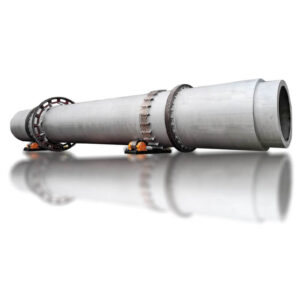
Major Advantages:
Massive Volume & Weight Reduction: Drying can reduce sludge volume by up to 75%, drastically cutting transportation and disposal costs.
Pathway to Reuse: Dried sludge (biosolids) can be used as agricultural fertilizer, soil amendment, or as a fuel source in cement kilns or power plants (waste-to-energy).
Stabilization & Sanitization: The high-temperature process eliminates pathogens, odors, and harmful bacteria, making the sludge inert and stable for safe handling and storage.
Cost-Effective Disposal: Significantly lowers the cost of landfill disposal, which is often charged by weight or volume.
Environmental Compliance: Helps facilities meet strict environmental regulations for sludge disposal and reduces the overall environmental footprint.
Benefits of Sludge Drying
Drying sludge is not just a disposal step; it’s a value-adding process with multiple benefits:
Economic Benefits: The most immediate benefit is the massive reduction in disposal and transportation costs.
Environmental Benefits: Enables safe reuse (land application), reduces landfill burden, and can contribute to a circular economy through waste-to-energy.
Operational Benefits: Dry sludge is easier to handle, store, and transport. It does not freeze in winter and has a much longer shelf life.
Regulatory Benefits: Produces a stabilized product that is easier to approve for land application or other beneficial uses, ensuring compliance with environmental standards.
Customized Sludge Drying Solutions
we understand that every sludge stream is unique. A one-size-fits-all approach does not work. That’s why we specialize in providing fully customized sludge drying solutions tailored to your specific needs.
Our process includes:
Sludge Analysis: We analyze your sludge’s characteristics (moisture content, composition, viscosity, calorific value) to determine the best approach.
System Design: We engineer a complete system, including the drum dryer, feeding system, heat source (gas, oil, biomass, etc.), air pollution control, and control panel, sized perfectly for your required capacity.
Heat Source Optimization: We help you select the most economical and efficient heat source, whether it’s natural gas, biogas from your digester, biomass, or even thermal oil.
End-Product Goal: We design the system with your final goal in mind—whether it’s producing fertilizer pellets, creating a fuel source, or simply minimizing volume for landfill.
Full Support: From installation and commissioning to operator training and after-sales service, we are with you every step of the way.