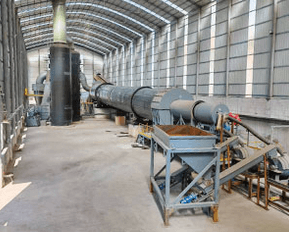
A High Temperature Rotary Dryer is an industrial drying system designed to reduce moisture content from bulk materials using heated gas in a rotating cylindrical drum. Unlike standard dryers, it operates at significantly elevated temperatures, making it ideal for processing materials that require rapid, efficient drying or specific thermal treatment. Its robust construction allows for continuous, high-volume operation in demanding environments, serving as a critical piece of equipment in many process industries where precise moisture control is essential.
How Does a High Temperature Rotary Dryer Work?
The operation is both straightforward and effective. Wet material is fed into one end of a slightly inclined, rotating drum. As the drum turns, internal lifting flights pick up the material and shower it evenly across the cross-section. Meanwhile, hot air or combustion gases, generated from a dedicated heat source, flow through the drum—typically in a co-current or counter-current direction to the material. This direct contact exposes the material particles to intense heat, causing rapid evaporation of moisture. The tumbling action ensures uniform exposure and prevents clumping. Finally, the dried material exits at the lower end, while the moisture-laden exhaust gas is treated and expelled.
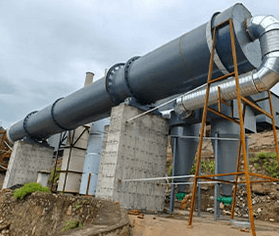
Primary Applications of High Temperature Rotary Dryers
These dryers are workhorses in industries where high-throughput drying or thermal processing is required. Key sectors include:
Minerals & Mining: Drying ores, concentrates (e.g., zinc, copper), silica sand, and limestone.
Chemical Industry: Processing fertilizers, synthetic compounds, and various chemical powders.
Aggregate & Building Materials: Producing expanded clay, drying slag, and gypsum.
Environmental Sector: Drying sewage sludge into biosolids for disposal or fuel, and treating contaminated soils.
Biomass & Alternative Fuels: Drying wood chips, sawdust, and other biomass for pellet production.
What Materials Can Be Dried and Suitable Temperature Ranges
High Temperature Rotary Dryers handle a vast array of non-heat-sensitive, granular, or powdery materials. Common examples are mineral concentrates, silica sand, chicken manure, brewery spent grain, and certain chemical salts.
The “high temperature” typically refers to an inlet gas temperature range from 800°F to 1800°F (approximately 425°C to 1000°C). The actual material temperature is much lower due to evaporative cooling. This range is most suitable for thermally stable, non-combustible materials like:
Mineral Ores and Stones: Silica sand, limestone, clay.
Industrial By-products: Slag, certain sludges, foundry sand.
High-Moisture Aggregates requiring intense, rapid drying.
Choosing the Right Heat Source
Selecting a heat source depends on cost, availability, environmental regulations, and product purity requirements. Common options include:
Natural Gas or Propane Burners: The most common choice, offering clean combustion and easy temperature control.
Fuel Oil Burners: A viable alternative where gas is unavailable.
Biomass Burners: Using wood waste or agricultural waste, ideal for sustainable operations in biomass plants.
Hot Air from Waste Heat Recovery: Utilizing exhaust from other processes (e.g., kilns, engines) for exceptional energy efficiency.
Steam Coils (Indirect): Used when contamination from combustion gases must be avoided, though typically for lower temperature ranges.
How Customers Select the Right High Temperature Rotary Dryer
Informed customers focus on several key parameters to match the dryer to their needs. They evaluate:
Material Characteristics: Initial/final moisture content, particle size, abrasiveness, and thermal sensitivity.
Required Production Capacity: The desired throughput in tons per hour.
Drying Specifications: The necessary final moisture percentage and product quality.
Heat Source & Fuel Availability: What energy source is most practical and economical on-site.
Environmental & Emission Standards: Local regulations that dictate necessary exhaust gas cleaning systems.
Space and Installation Constraints: The available footprint and layout of the plant.
Custom-Built High Temperature Rotary Dryers Based on Your Requirements
Off-the-shelf solutions often fall short. That’s why leading manufacturers specialize in engineering custom rotary dryers tailored to specific client needs. This process involves analyzing your material sample, defining process goals, and designing the drum (size, flight pattern, inclination), selecting appropriate materials of construction for wear and heat resistance, integrating the optimal heat source and burner system, and designing dust collection and emission control systems. Whether you need special refractory lining, unique air flow patterns, or automated control systems, a custom-built dryer ensures optimal efficiency, reliability, and return on investment for your unique application.