
how to choose a rotary dryer
The Best Choices for Your Project
We provide Dryer equipment for you
- Customization Service: Dryer for you
- Solution:Provide solutions for your problems
- Dryer length: 8 meters to 36 meters.
how to choose a rotary dryer
Introduction
Are you looking for an efficient, reliable drying solution for bulk materials? A rotary dryer might be the perfect fit. This comprehensive guide will walk you through everything you need to know about rotary dryers—from what they are and what they can process, to key selection criteria, heat source options, and customization. Learn how to make an informed decision and request the ideal dryer for your operation.
What is a Rotary Dryer?
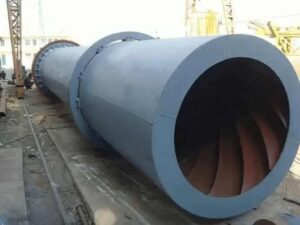
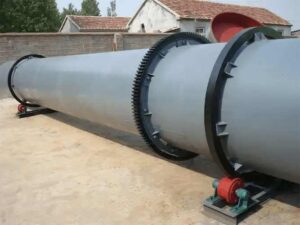
A rotary dryer, also known as a drum dryer, is an industrial drying machine designed to reduce the moisture content of bulk materials through continuous, direct or indirect heat transfer. It consists of a large, rotating cylindrical drum slightly inclined to allow material to flow from the feed end to the discharge end. Hot air or gases are passed through the drum, evaporating moisture as the material tumbles. Known for their high capacity, durability, and uniform drying, rotary dryers are a cornerstone in mineral processing, chemical, agricultural, and waste recycling industries.
Materials Dried & Key Applications
Rotary dryers are highly versatile and can handle a wide range of materials:
Minerals & Aggregates: Sand, silica, clay, limestone, ore concentrates.
Agricultural Products: Grains, soybeans, distiller’s grains (DDGS), wood chips, fertilizer.
Chemicals: Salts, polymers, pigments, chemical crystals.
Industrial By-products & Waste: Sludge (municipal/industrial), bark, metal filings, biomass.
Primary Applications:
Mining & Minerals: Drying concentrates and sands after beneficiation.
Agriculture & Biofuels: Drying crops and biomass for storage or pelletizing.
Chemical Manufacturing: Preparing powdered or granular chemicals.
Environmental Protection: Reducing volume and weight of sludge for disposal or reuse.
How to Choose the Right Rotary Dryer: Key Selection Criteria
Selecting the optimal rotary dryer requires careful analysis of your specific needs:
Material Characteristics: Consider initial moisture content, final desired moisture, particle size, abrasiveness, thermal sensitivity, and flow properties.
Required Capacity: Define hourly throughput (e.g., tons per hour) to size the drum diameter and length.
Drying Method: Choose between direct (hot air contacts material) for high efficiency or indirect (heating through shell) for sensitive or dusty materials.
Drum Features: Inclination angle, rotation speed, and internal lifting flights design significantly impact drying efficiency and residence time.
Construction Quality: Look for robust materials (e.g., wear-resistant steel for abrasive materials), quality bearings, and reliable drive systems.
Choosing the Right Heat Source for Your Rotary Dryer
The heat source is critical for efficiency, cost, and environmental impact. Common options include:
Natural Gas/Propane: Clean, controllable, and widely used for direct heating. Ideal for areas with gas infrastructure.
Oil (Diesel/Heavy Oil): High energy density, suitable for remote locations, but requires storage and emissions management.
Coal/Biomass: Lower fuel cost, often used in indirect systems or where local fuel is abundant. Requires a separate furnace and handling system.
Steam: Provides gentle, indirect heating, perfect for heat-sensitive materials. Requires a boiler.
Electricity: Clean and precise but often expensive for large-scale industrial drying.
Waste Heat Recovery: Utilizing exhaust from other processes (e.g., kilns, engines) maximizes energy efficiency and reduces operating costs.
Selection depends on local fuel availability, cost, environmental regulations, and material temperature limits.
Custom Rotary Dryers: Built to Your Specifications
we understand that standard solutions don’t always fit unique challenges. We offer fully customized rotary dryers tailored to your exact process requirements. Our engineering team works with you to design dryers with specific dimensions, special internals, unique material handling systems, corrosion-resistant linings, and integrated automation controls. Whether you need a unit for a pilot plant or a massive production line, we can deliver a solution that optimizes your drying efficiency, lifespan, and ROI.
How to Select a Rotary Dryer Based on Quality
Choosing a high-quality rotary dryer ensures long-term reliability, lower maintenance costs, and consistent performance. Here are key quality indicators to evaluate:
Manufacturing & Materials:
Drum Shell: Look for thick, high-grade steel plates (e.g., Q345B or equivalent) with uniform welding. Critical sections should use wear-resistant or stainless steel for abrasive/corrosive materials.
Support System: Heavy-duty rollers and trunnions should be precision-machined, heat-treated for hardness, and paired with high-class bearings (e.g., SKF, TIMKEN).
Drive System: A robust gear and pinion transmission or chain drive, powered by a reliable motor (e.g., Siemens, WEG) and variable frequency drive (VFD) for smooth speed control, is essential.
Internals: Lifter flights should be thick, well-secured, and designed for optimal material cascade and heat transfer.
Design & Engineering Standards:
Reputable manufacturers use advanced thermal and mechanical simulations to optimize drum size, airflow, and heat distribution.
The dryer should be designed per international standards (e.g., ASME, CE) with proper safety factors.
Assembly & Finishing:
Inspect weld quality, alignment of rotating parts, and surface treatment (e.g., sandblasting, anti-corrosion paint).
All components should fit precisely with minimal runout or vibration.
Supplier Reputation & Testing:
Choose established manufacturers with a proven track record. Request client references and visit project sites if possible.
Ask about factory acceptance testing (FAT), where the dryer’s main functions, alignment, and rotation are tested before shipment.
A quality dryer may have a higher initial cost but offers far greater value through decades of trouble-free operation.
Request for Quotation (RFQ) for a Rotary Dryer
When contacting suppliers, providing detailed information ensures an accurate quote. Please be ready to share:
Material Info: Name, initial/final moisture content (% wet & dry basis), bulk density, particle size.
Capacity: Desired throughput (kg/hr or tons/hr) – wet feed and/or dry product.
Heat Source Preference: Natural gas, steam, electric, etc.
Site Conditions: Available space, power supply, ambient temperature & humidity.
Special Requirements: Explosion-proofing, dust control, specific construction materials (e.g., SS304/316), level of automation.
Contact us today with your project details for a free technical evaluation and competitive quotation. Let our experts help you build the most efficient drying system.