
wastewater sludge dryer
The Best Choices for Your Project
- Customization Service:The maximum customizable diameter is 3.5 meters
- Solution:Provide solutions for your problems
- Dryer length: 8 meters to 50 meters.
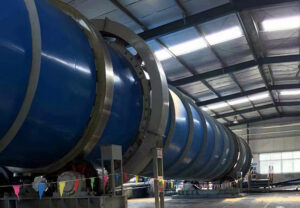
wastewater sludge dryer
A Wastewater Sludge Dryer is an industrial thermal system designed to reduce the moisture content of sludge generated from wastewater treatment plants. By applying heat, it evaporates water from the sludge, transforming it from a wet, bulky, and often hazardous material into a dry, stable, and manageable product. This process significantly reduces volume and weight, cutting disposal costs and enabling beneficial reuse.
Types of Wastewater Sludge
Understanding your sludge type is crucial for selecting the right dryer. The main categories include:
Municipal Sludge: From domestic sewage plants. It’s rich in organic matter and nutrients but may contain pathogens and heavy metals.
Industrial Sludge: From manufacturing processes (e.g., chemical, pharmaceutical, food processing, pulp & paper). Its composition is highly variable and can contain specific contaminants.
Chemical Sludge: Resulting from chemical precipitation in industrial or water treatment plants, often containing high levels of inorganic compounds.
The most common type is the Indirect Rotary Drum Dryer. Here’s a step-by-step breakdown of its working principle:
Feeding: Wet sludge (typically with 75-85% moisture) is continuously fed into the rotating drum.
Heat Transfer: The drum is heated indirectly by a thermal medium (hot thermal oil, steam, or hot gas) circulating in a jacket around the drum. The sludge does not contact the heating medium.
Drying & Agitation: As the drum rotates, internal flights (fins) lift and cascade the sludge through the heated airspace, ensuring maximum heat transfer and uniform drying.
Vapor Removal: The evaporated water vapor is extracted by a fan system, passed through an air pollution control unit (like a scrubber or condenser) to clean it, and then discharged.
Discharge: The dried sludge (now with 10-40% moisture) is discharged at the other end, ready for disposal, incineration, or as a soil amendment.
Key Working Characteristics & Advantages
High Volume/Weight Reduction: Reduces sludge volume by up to 75%, drastically cutting transportation and disposal costs.
Pathogen Elimination: The high-temperature process effectively sterilizes the sludge, destroying harmful pathogens.
Stabilization: Stops biological activity, eliminating odors and making the sludge stable for storage.
Beneficial Reuse Potential: Dried sludge can be used as a fertilizer, soil conditioner, or as a fuel source (biofuel) in cement kilns or power plants.
Environmentally Friendly: Minimizes landfill use and enables a circular economy approach.
Key Performance & Parameters
Performance is primarily measured by Evaporation Capacity (kg of water removed per hour). Key parameters include:
Evaporation Capacity: Ranges from 200 kg H₂O/h to over 5,000 kg H₂O/h.
Initial Moisture Content: Typically handles 75%-85%.
Final Moisture Content: Adjustable, usually between 10%-40%.
Thermal Efficiency: A measure of how effectively heat is used; modern systems achieve 70%-85%.
Power Consumption: Depends on the model size, primarily for the drive motor and fans.
| Model | Drum Size (Dia. x Length) | Evaporation Capacity (kg H₂O/h) | Power (kW) | Footprint (LxWxH) |
|---|---|---|---|---|
| WSR-1214 | 1.2m x 14m | 400 – 700 | 25 – 40 | 16m x 4.5m x 5.5m |
| WSR-1518 | 1.5m x 18m | 700 – 1,200 | 40 – 65 | 20m x 5.5m x 6m |
| WSR-1822 | 1.8m x 22m | 1,200 – 2,000 | 65 – 90 | 25m x 6m x 7m |
| WSR-2226 | 2.2m x 26m | 2,000 – 3,500 | 90 – 132 | 30m x 7m x 8m |
Choosing Your Heat Source: We Provide Flexibility
Selecting the right heat source is critical for operational cost and efficiency. We offer dryers compatible with:
Natural Gas / Propane: Clean, efficient, and easy to control.
Biogas: A sustainable and cost-effective option if produced on-site from anaerobic digesters.
Fuel Oil / Diesel: Reliable and high-energy, suitable for areas without gas infrastructure.
Biomass: Using wood chips or agricultural waste for a renewable and low-cost solution.
Steam / Thermal Oil: Ideal for indirect heating, offering precise temperature control.
Waste Heat: The most economical choice, utilizing flue gas from incinerators or other industrial processes.
Your Customized Sludge Drying Solution
We understand that every wastewater treatment facility is unique. There is no universal “one-size-fits-all” solution. That’s why we specialize in customized sludge drying systems.
Our engineering team will work with you to:
Analyze Your Sludge: We test your sludge’s composition, viscosity, and moisture content.
Define Your Goals: Determine your target final moisture, capacity needs, and end-use for the dried product (disposal, reuse, fuel).
Optimize the Design: We select the optimal model, heat source, and auxiliary equipment (feeders, condensers, scrubbers) tailored to your specific situation.
Maximize Your ROI: Our goal is to design a system that offers the lowest total cost of ownership, highest reliability, and best return on your investment.
Contact us today for a free consultation and let us design a wastewater sludge drying solution that perfectly fits your needs and budge