
industrial drying equipment
The Best Choices for Your Project
- Customization Service:The maximum customizable diameter is 3.5 meters
- Solution:Provide solutions for your problems
- Dryer length: 8 meters to 50 meters.
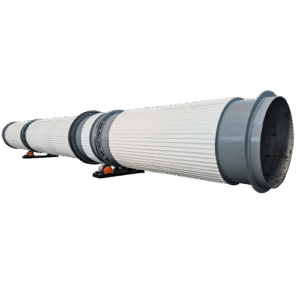
industrial drying equipment
Our industrial drying equipment is versatile and capable of handling numerous materials across various sectors, including:
Minerals & Mining: Sand, clay, limestone, ore, gypsum, silica.
Agricultural Products: Grains (corn, rice, wheat), soybeans, alfalfa, distiller’s dried grains (DDGS).
Bio-Organic Materials: Sludge, manure, wood chips, sawdust, bark.
Chemicals & Industrial By-products: Chemical powders, fertilizers, salts, pigments.
Food Processing: Fruits, vegetables, tea leaves, spices.
he working principle of a sludge drum dryer involves indirect or direct heat transfer within a rotating cylinder to evaporate moisture. Here’s a step-by-step breakdown of how it dries the sludge:
Feeding: Wet sludge (with moisture content typically 80% or higher) is fed into the system. A specialized feeder, like a screw conveyor or pump, ensures a consistent and controlled feed rate into the inclined rotating drum.
Lifting and Showering: As the drum rotates, a series of internal fins (lifting flights) pick up the sludge and cascade it down in a “curtain-like” manner throughout the drum’s cross-section.
Heat Transfer & Drying:
Direct Heating: Hot air or combustion gases (from a burner using natural gas, diesel, etc.) flow through the drum, directly contacting the showering sludge. This is the most common method for high-capacity drying.
Indirect Heating: Hot thermal oil or steam circulates in a jacket around the drum, heating the shell, which then transfers heat to the sludge inside. This method is used for more sensitive or potentially explosive sludges.
Moisture Evaporation: The intense heat and the large surface area created by the cascading action cause the water in the sludge to evaporate rapidly.
Transport and Discharge: The combination of gravity (from the drum’s incline) and the flow of hot gases moves the drying sludge toward the discharge end. By the time it exits, the sludge is converted into dry, powdery, or granular pellets with a moisture content as low as 10-20%.
Vapor Treatment: The moist, hot exhaust gases containing water vapor and potential pollutants are sent to an air treatment system, such as a condenser, scrubber, or thermal oxidizer, to clean the emissions before release.
Here is a table outlining the key parameters for our standard rotary drum dryer models. Please note that we specialize in customizing industrial drying equipment to meet your specific capacity and material requirements.
| Model | Drum Diameter (m) | Drum Length (m) | Capacity (t/h) | Inlet Moisture (%) | Outlet Moisture (%) | Power (kW) |
|---|---|---|---|---|---|---|
| RDT-1212 | 1.2 | 12 | 1.5 – 2.5 | 15-25% | <3% | 18.5 |
| RDT-1515 | 1.5 | 15 | 3.5 – 5.0 | 15-30% | <3% | 22 |
| RDT-1818 | 1.8 | 18 | 6.0 – 8.0 | 20-35% | <4% | 30 |
| RDT-2222 | 2.2 | 22 | 10.0 – 15.0 | 25-40% | <5% | 45 |
| Custom Model | As Required | As Required | As Required | As Required | As Required | As Required |
Table Note: Specifications are for reference only and may vary based on material characteristics and operational conditions.
Key Advantages of Our Industrial Drying Equipment
High Thermal Efficiency: Advanced heat exchange design ensures maximum energy utilization, reducing fuel costs.
Robust Construction: Built with high-quality, wear-resistant materials for long service life and minimal maintenance.
Uniform Drying: The rotary tumbling action ensures consistent and even drying of all material particles.
Low Operating Cost: Simple design leads to low power consumption and reduced operational expenses.
Strong Adaptability: Capable of handling materials with varying moisture content and particle sizes.
Automation & Intelligent Control
Our industrial drying equipment can be equipped with advanced PLC control systems. This high level of automation provides:
Precise Temperature Control: Automated monitoring and adjustment of inlet/outlet temperatures for optimal drying.
Real-time Monitoring: Track key parameters like moisture content, drum speed, and fuel consumption.
Easy Operation: User-friendly touchscreen interface for simplified control and parameter setting.
Safety & Alarms: Automated safety interlocks and alarm systems to protect the equipment and operators.
Data Logging: Record operational data for analysis and process optimization.
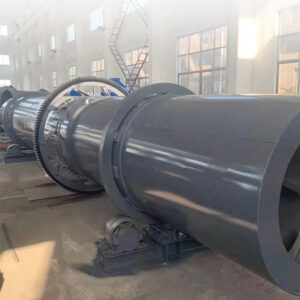
What Problems Can We Solve for You?
Our industrial drying equipment is designed to address critical challenges in your production line:
Efficient Moisture Removal: Quickly and effectively reduce moisture to the desired level for storage, transport, or further processing.
Increased Production Capacity: Handle large volumes of material continuously, boosting your overall output.
Product Quality Improvement: Uniform drying prevents over-drying or under-drying, preserving product quality and value.
Waste Reduction: Convert wet, difficult-to-handle by-products (like sludge) into dry, manageable, and potentially valuable resources.
Space Optimization: Compact and continuous design saves valuable factory floor space compared to batch drying methods.
Customized Industrial Drying Equipment
We understand that every client’s needs are unique. We offer fully customized industrial drying equipment solutions tailored to your specific requirements. Our engineering team will work with you to design a dryer that fits your:
Material Type and Characteristics
Required Capacity and Throughput
Available Space and Layout
Specific Moisture Inlet/Outlet Targets
Preferred Heat Source (gas, oil, biomass, steam, etc.)
Contact us today for a free consultation. Let us provide you with the perfect industrial drying equipment solution to enhance your productivity and profitability.