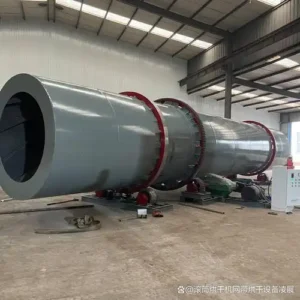
Whether you’re in ceramics, construction, or environmental remediation, effectively drying clay is a crucial step in your process. If you’re searching for a reliable, efficient, and scalable solution, a Rotary Dryer for Drying Clay might be the answer. But what exactly is it, and how does it work? Let’s break it down without the overly technical jargon.
What is a Clay Rotary Dryer?
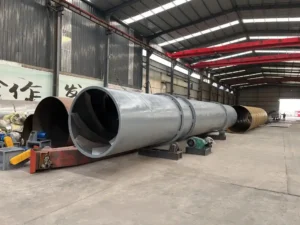
Simply put, a clay rotary dryer is a large, rotating cylinder designed to remove moisture from clay. Think of it as a long, slowly-turning drum that clay tumbles through while hot air flows through it. This industrial workhorse transforms sticky, wet clay into a consistent, dry material ready for the next stage, whether that’s forming bricks, producing pottery, or manufacturing cement. It’s built to handle high volumes and tough, abrasive materials that would wear out other types of dryers.
How Does a Rotary Dryer for Drying Clay Work?
The process is cleverly straightforward. Wet clay is fed into one end of the slightly inclined rotating drum. As the drum turns, internal lifters (like fins or flights) pick up the clay and shower it down through a stream of hot air moving through the cylinder. This “cascading” action exposes the maximum surface area of the clay particles to the heat. The moisture evaporates, and the dried clay gradually moves toward the lower end of the drum due to gravity and the slope, where it’s discharged. The moist exhaust air is then treated and released. It’s a continuous, highly efficient system of heat and motion.
Key Features & Advantages
Why choose a rotary dryer for clay? The benefits are clear:
Robust Construction: Built with thick steel and durable internal components to withstand the abrasive nature of clay.
High Capacity: Capable of processing large tonnages consistently, ideal for industrial-scale operations.
Uniform Drying: The tumbling action ensures every particle gets evenly exposed to heat, preventing over-drying or wet spots.
Versatility: It can handle clay with varying initial moisture contents and adjust to different final dryness requirements.
Low Maintenance: Simple design with fewer moving parts than some alternatives means less can go wrong and easier servicing.
Flexible Heat Source Options
One of the biggest practical advantages is fuel flexibility. You’re not locked into one energy source. Depending on your local availability, costs, and environmental policies, these dryers can be configured to use:
Natural Gas or Propane: Clean and efficient, often preferred for consistent operation.
Diesel or Heavy Oil: A common choice for remote sites or areas without gas infrastructure.
Biomass: Using wood chips, agricultural waste, or other biofuels can significantly reduce operating costs and carbon footprint.
Coal: In regions where it’s economically viable.
Electric or Steam: For specific applications where direct combustion isn’t suitable.
This flexibility allows you to control running costs and adapt to future energy market changes.
Automation & Customization
Modern rotary dryers are far from primitive. They can be equipped with automated control panels to regulate temperature, drum speed, and feed rate, ensuring optimal efficiency with minimal manual intervention. More importantly, they are not one-size-fits-all. Reputable manufacturers understand that every project is unique. Whether you need a compact, skid-mounted unit for a pilot plant or a massive, field-erected dryer for a major production line, the design can be customized. We work with clients to tailor the size, configuration, and features to match their specific clay type, production goals, and site constraints.
How to Choose the Right Rotary Dryer for Your Clay
Selecting the right dryer can feel daunting. Focus on these key questions:
Material Analysis: What is the specific type of clay, its initial moisture content, and desired final moisture?
Production Goals: What is your required hourly or daily output (tonnage)?
Site & Space: How much physical space do you have for installation and operation?
Available Heat Source: What is the most practical and economical fuel for your location long-term?
Budget: Consider both the upfront capital investment and the long-term operating costs (fuel, maintenance).
The best approach is to partner with an experienced manufacturer who can analyze your needs and recommend a tailored solution, not just sell a standard model.
Additional Considerations
Beyond the dryer itself, think about the entire system. Efficient drying also depends on proper upstream preparation (like clay crushing or shredding) and downstream handling. Furthermore, today’s environmental standards are crucial. Look into optional add-ons like advanced dust collection systems (bag filters, cyclones) and emissions scrubbers to ensure your operation is clean and compliant. Investing in a well-designed, quality dryer upfront often leads to far lower costs and headaches over its 15-20 year lifespan. Remember, the goal is a reliable process that turns a challenging material into a valuable, consistent product day in and day out.